





What's Happening?
The global market for N-(n-propyl) thiophosphoric triamide (NPPT) urease inhibitors is experiencing rapid growth, driven by the need for sustainable agriculture practices. The market is projected to grow from $2.14 billion in 2026 to $12.24 billion by 2030,
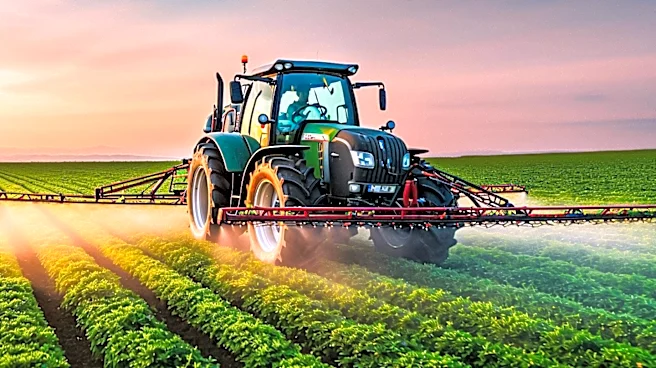
with a compound annual growth rate of 54.6%. This growth is fueled by tighter environmental regulations, increased demand for enhanced-efficiency fertilizers, and the adoption of precision nutrient management. NPPT urease inhibitors help reduce nitrogen losses during fertilizer application, improving nutrient availability and crop yields. The market expansion is supported by rising global fertilizer consumption and efforts to improve agricultural output.
Why It's Important?
The expansion of the NPPT urease inhibitor market reflects a broader shift towards sustainable agriculture and environmental responsibility. As agricultural producers seek to enhance nitrogen use efficiency and reduce emissions, the demand for urease inhibitors is expected to rise. This trend aligns with global efforts to address climate change and improve food security. The market growth presents opportunities for companies involved in fertilizer production and agricultural technology, potentially leading to innovations in sustainable farming practices. The increased use of urease inhibitors could also contribute to achieving emissions-reduction targets and improving soil health.
What's Next?
The continued growth of the NPPT urease inhibitor market is likely to drive further innovation in fertilizer technologies and sustainable agriculture practices. Companies may invest in developing high-efficiency formulations and precision agriculture platforms to enhance nutrient performance. Regulatory pressures and environmental compliance requirements will play a significant role in shaping market dynamics. As the market expands, stakeholders will focus on measuring and validating greenhouse gas reductions, potentially leading to the generation of agricultural carbon credits. The Asia-Pacific region is expected to be a key growth area, driven by agricultural intensification and sustainable farming initiatives.