






What's Happening?
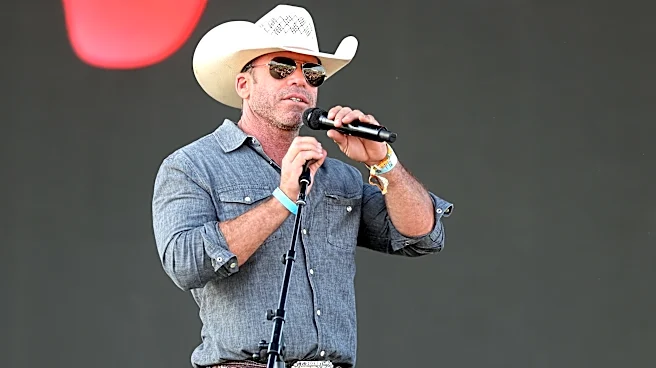
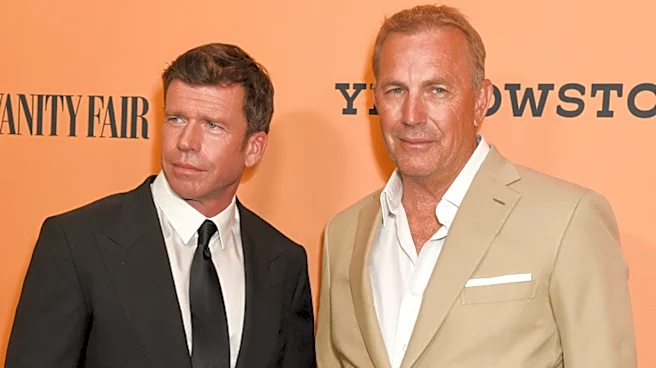
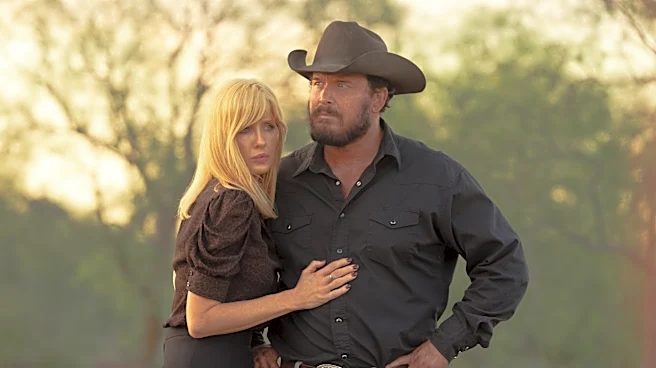
Taylor Sheridan, the creator of the popular TV series 'Yellowstone,' has expressed his disregard for critics' opinions in a recent interview on The Bill Simmons Podcast. Sheridan, known for his neo-Western television dramas, stated that he does not seek
approval from critics when crafting storylines for his shows, including 'Yellowstone' and its spin-offs. He mentioned that he sometimes intentionally provokes critics, a tactic he refers to as 'rage-baiting.' Sheridan also criticized the current trend in the entertainment industry of 'endless rewrites' and the lack of creative autonomy for writers and directors, contrasting it with the more writer-friendly environment of the past. He has recently moved from Paramount to NBC Universal, reportedly due to his refusal to make his shows overtly political.
Why It's Important?
Sheridan's comments highlight ongoing tensions between creative professionals and critics, as well as between creators and studio executives. His critique of the industry's current practices underscores a broader debate about creative control and the influence of marketing and executive decisions on artistic work. This situation reflects a significant issue in the entertainment industry, where creators often feel constrained by commercial and political pressures. Sheridan's move to NBC Universal suggests a potential shift in how networks might handle creative content, possibly influencing future industry practices. His stance may resonate with other creators who feel similarly restricted, potentially leading to changes in how creative projects are managed and produced.
What's Next?
Sheridan's transition to NBC Universal could set a precedent for other creators seeking more creative freedom. It remains to be seen how this move will impact his future projects and whether it will influence other networks to reconsider their approach to creative autonomy. The industry may witness a shift in how networks balance creative freedom with commercial interests, especially if Sheridan's new projects under NBC Universal prove successful. Additionally, his outspoken criticism of critics and studio practices might encourage other creators to voice similar concerns, potentially leading to broader discussions about the role of critics and executives in the creative process.