



What's Happening?
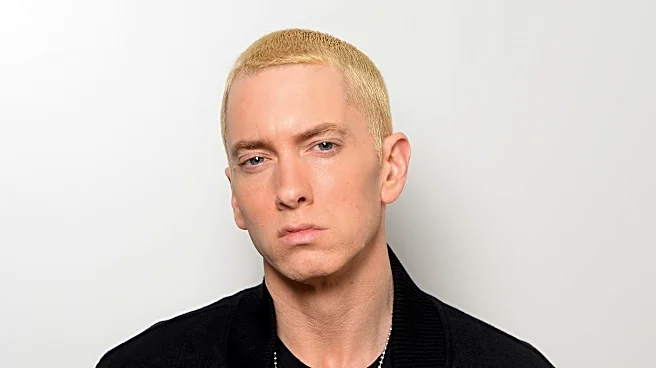
Puerto Rican rapper Anuel AA has publicly acknowledged Eminem as a significant inspiration throughout his music career. In an interview on SiriusXM's 'CTRL-ALT D-Stroy' show with host D-Stroy, Anuel AA discussed how Eminem influenced his approach to songwriting.
He specifically mentioned creating a Spanish version of the 'Stan' hook while incarcerated, which became a pivotal song in his career, resonating deeply with his audience. Anuel AA emphasized that Eminem taught him the importance of expanding lyrical themes beyond typical subjects like romance, commercial appeal, or street narratives. He noted that Eminem demonstrated that music could also be created for family members, such as mothers or daughters, broadening the scope of artistic expression. This perspective helped Anuel AA craft songs that explored personal struggles and life experiences, including one that sampled Eminem's 'Mockingbird' beat, which he described as prophetic due to its reflection of his life before success. The full interview is scheduled to air on Tuesday, November 10, at 4 p.m. ET on SiriusXM's Shade 45.
Why It's Important?
Anuel AA's public recognition of Eminem's influence highlights the enduring cross-cultural impact of American hip-hop artists on global music. This acknowledgment underscores how Eminem's artistic versatility and willingness to explore diverse lyrical content have shaped the creative direction of artists in different genres and regions. For the U.S. music industry, it reinforces Eminem's status as a foundational figure whose work transcends linguistic and cultural barriers, continuing to inspire new generations of musicians. This influence can lead to further cross-genre collaborations and thematic explorations within hip-hop and Latin music, potentially enriching both landscapes. It also demonstrates the power of artistic mentorship, even if indirect, in shaping career trajectories and encouraging artists to push creative boundaries. Anuel AA's success, partly attributed to Eminem's influence, showcases how embracing broader themes can lead to deeper audience connection and critical acclaim, benefiting artists who might otherwise feel constrained by genre conventions.
What's Next?
The full interview with Anuel AA on SiriusXM's 'CTRL-ALT D-Stroy' show is set to air on Tuesday, November 10, at 4 p.m. ET on Shade 45. This broadcast may further detail the specific ways Eminem's music impacted Anuel AA's creative process and career decisions, potentially offering deeper insights into their artistic connection. The discussion could also spark renewed interest in both artists' discographies, leading to increased streaming and sales for their respective catalogs. For Anuel AA, this public declaration of influence might open doors for future collaborations or shared projects with Eminem or other artists within the Shady Records ecosystem. It could also encourage other artists to openly discuss their inspirations, fostering a more transparent and interconnected music community. Fans of both artists may anticipate potential interactions or tributes, further solidifying the cross-generational and cross-genre impact of Eminem's legacy.
Beyond the Headlines
Anuel AA's tribute to Eminem extends beyond a simple acknowledgment of influence; it speaks to a broader shift in artistic expression within hip-hop and urban music. Eminem's pioneering approach to personal narrative and emotional depth in his lyrics, particularly in songs like 'Stan' and 'Mockingbird,' provided a blueprint for artists to explore vulnerability and complex family dynamics. This has helped deconstruct traditional notions of masculinity and subject matter in rap, encouraging a more introspective and diverse lyrical landscape. Anuel AA's adoption of these thematic elements, even while incarcerated, demonstrates the universal resonance of such storytelling. This trend suggests a continued evolution in hip-hop, where authenticity and emotional honesty are increasingly valued alongside traditional themes of bravado and street life. It also highlights the role of music as a therapeutic and connective medium, allowing artists to process personal experiences and audiences to find common ground in shared human emotions, regardless of cultural background.