


What's Happening?
Tina Vaz, Director of Arts & Design at the Metropolitan Transportation Authority (MTA), discussed the extensive public art program within New York's transit system. The program, established in 1985, has commissioned over 400 site-specific works, making
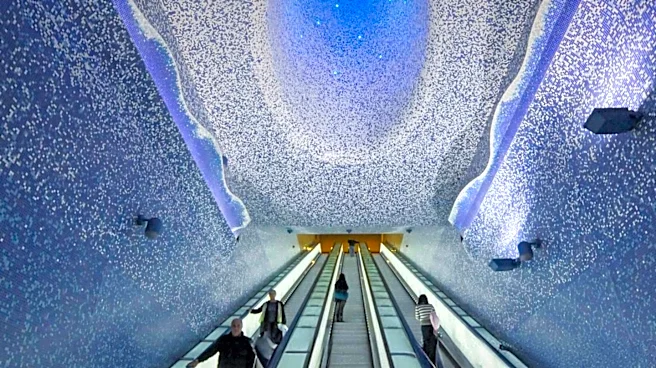
it one of the largest public art collections globally. These artworks, primarily using durable materials like mosaic glass and metal, are integrated into subway, bus, and commuter rail environments across 5,000 square miles. Vaz emphasized that the art is designed to withstand the transit environment and to be a permanent fixture. The program also includes initiatives like 'Poetry in Motion' and 'MTA Music,' which bring poetry and live musical performances to transit spaces. A recent rider survey revealed that 91% of respondents notice art in the subway, and 80% of those who frequently see art reported that it improves their transit experience. This data underscores the program's success in enhancing the daily commute for millions of New Yorkers.
Why It's Important?
The MTA Arts & Design program demonstrates a significant commitment to integrating culture into daily urban life, impacting millions of U.S. citizens who use public transit. By placing art in accessible public spaces, the initiative aims to democratize art exposure, making it available to everyone regardless of their ability to visit traditional art institutions. This approach can foster a sense of community and civic pride, transforming functional spaces into engaging environments. The positive feedback from rider surveys indicates that public art can genuinely improve the quality of life for urban dwellers, potentially reducing stress and enhancing mental well-being during commutes. This model could influence other U.S. cities and transit authorities to invest in similar public art programs, recognizing art not just as an aesthetic addition but as a vital component of urban infrastructure and public service. The program also supports artists, including emerging talents, by commissioning new works and providing a platform for their creations.
What's Next?
Looking ahead, Tina Vaz plans to expand on successful initiatives and explore new avenues for public art engagement. The 'takeover model,' piloted with the Christopher Payne exhibition, will be extended to the digital art program. The monthly station series, which brings live performances to transit hubs, will continue, with ongoing collaborations, including with WNYC. The MTA anticipates numerous opportunities for new artwork commissions due to a robust capital program. Vaz is also exploring audio experiences tailored for commuters and focusing more intentionally on the well-being effects of art within the stressful urban environment. These future developments aim to further integrate art into the daily lives of New Yorkers, leveraging technology and diverse artistic forms to enhance the transit experience and promote collective well-being.
Beyond the Headlines
The MTA Arts & Design program highlights a broader philosophical shift in urban planning and public policy, recognizing art as an essential component of a 'livable city' rather than a mere embellishment. This initiative challenges the traditional boundaries of art consumption, moving it from exclusive galleries and museums into the public domain, thereby fostering a more inclusive cultural landscape. The program's emphasis on durable materials and site-specific works reflects a commitment to long-term cultural investment and the preservation of public memory. Furthermore, the data-driven approach, using rider surveys to measure impact, provides a compelling argument for the tangible benefits of public art, offering a model for other public institutions to justify and expand their cultural programming. This integration of art into infrastructure underscores the idea that aesthetic and emotional enrichment are fundamental human needs, even in the most utilitarian of spaces.