
What's Happening?
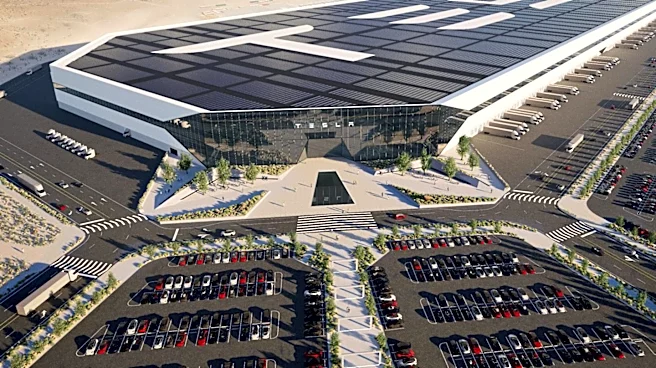
Tesla Inc. is seeking a 10-year property tax break from Texas school districts for a proposed $10.1 billion solar cell and module manufacturing plant. The facility, named Project Crystal Sun, would be
located on 3,057 acres in Fort Bend County, within the Lamar Consolidated Independent School District. The Texas Comptroller estimates the school-tax savings at approximately $115.2 million over the incentive period, which spans from 2029 to 2038. The Lamar Consolidated Independent School District trustees have unanimously approved the incentive with a 7-0 vote. However, this approval is not final, as the proposal still requires further action at the state level before any agreement can take effect. Tesla has not yet confirmed whether it will ultimately build the plant, nor has it disclosed details regarding construction start dates, production capacity, or total employment figures.
Why It's Important?
This proposed tax break highlights the ongoing trend of large corporations seeking significant incentives for major manufacturing projects in the U.S. The potential $115.2 million in school-tax savings for Tesla, while a small percentage of the total investment, represents a substantial amount for the local school district. The project's scale, with an estimated $8.6 billion dedicated to manufacturing equipment, underscores the capital-intensive nature of solar cell production. If approved and built, Project Crystal Sun could significantly boost domestic solar manufacturing capabilities, aligning with broader U.S. goals for energy independence and renewable energy adoption. However, it also raises questions about the financial impact on local communities and the effectiveness of such incentives in attracting and retaining large-scale industrial operations, particularly given the increasing public scrutiny of corporate subsidies.
What's Next?
The next critical step for Project Crystal Sun involves securing further state-level approvals in Texas. The unanimous vote by the Lamar CISD trustees opens the door, but the state framework governs the final agreement. Tesla will need to provide more specific details, such as construction timelines, production capacity, and employment projections, which are currently unconfirmed. These details will be crucial for both state reviewers and local stakeholders. The public mood regarding large-project subsidies is becoming more critical, and local scrutiny is expected to intensify as the estimated $115.2 million in foregone tax revenue becomes a more concrete figure. The outcome of this state review will determine the feasibility and timeline of Tesla's potential investment in this significant solar manufacturing facility.
Beyond the Headlines
The Project Crystal Sun proposal reflects a strategic shift for Tesla towards large-scale manufacturing of solar cells and modules, moving beyond its previous focus on installations through SolarCity. This move could position Tesla as a major player in the upstream solar supply chain, potentially reducing reliance on foreign-made components. The structure of the tax break, which includes a zero-taxable value during construction and a 50% reduction during operation for school maintenance-and-operations taxes, is designed to incentivize initial investment while ensuring that debt-related school taxes are still fully paid. This approach attempts to balance corporate attraction with local financial stability. The project's success could set a precedent for how states and local governments structure incentives for high-tech, capital-intensive manufacturing, particularly in the renewable energy sector, influencing future industrial development across the nation.