




What's Happening?
E.L.V. Denim, a sustainable denim label, has collaborated with Sanderson Design Group to launch a limited-edition collection that fuses fashion with home interiors fabrics. This collection, named Sanderson of London x E.L.V. Denim, is the first outcome
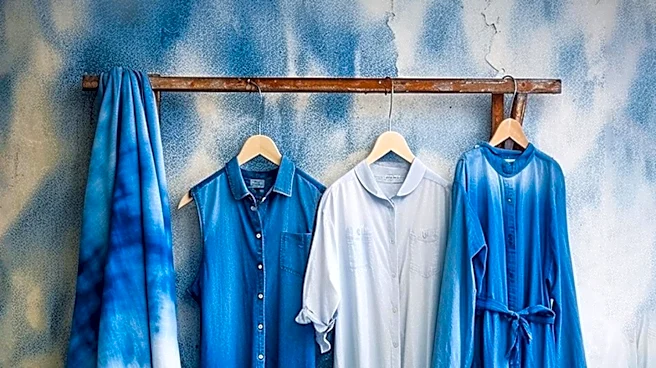
of a three-year partnership between the two London-based companies. The clothing pieces are crafted entirely from 100 percent upcycled, post-consumer waste denim sourced by E.L.V., combined with surplus, patterned textiles from Sanderson’s current portfolio and archive. Anna Foster, founder and creative director of E.L.V., personally created each piece, meticulously matching the density, thickness, patterns, and textures of the home fabrics with the denim. The 12-piece capsule includes new designs and reworked E.L.V. classics, such as the Freya and Audrey jeans, the Harvard skirt, and the Kara bomber jacket. The collection is available at stores including Liberty, Lane Crawford, and on the E.L.V. website, with prices ranging from 395 pounds for jeans to 1,250 pounds for a dress.
Why It's Important?
This collaboration between E.L.V. Denim and Sanderson Design Group is significant for the U.S. fashion and textile industries as it exemplifies a growing commitment to sustainability and circular economy principles. By utilizing 100% upcycled denim and surplus home interior fabrics, the collection addresses the critical issue of textile waste, which is a major environmental concern globally and within the U.S. market. This initiative demonstrates that high-end, fashionable products can be created from discarded materials, challenging the traditional linear model of production and consumption. For U.S. consumers, it offers unique, ethically produced garments that align with increasing demand for sustainable fashion. For businesses, it highlights a viable model for reducing environmental footprint, potentially influencing other brands to explore similar upcycling and collaborative strategies. The partnership also showcases how cross-industry collaborations can foster innovation and create new market opportunities in the sustainable sector.
What's Next?
The success of the Sanderson of London x E.L.V. Denim collection could inspire more U.S. fashion and home goods brands to explore upcycling and cross-industry collaborations. This partnership, rooted in a three-year agreement, suggests a long-term commitment to sustainable practices that could set a precedent for others. We might see an increase in brands investing in research and development for repurposing materials, leading to a wider array of upcycled products in the market. Furthermore, as consumer awareness and demand for sustainable fashion grow in the U.S., retailers may prioritize stocking brands that demonstrate strong environmental commitments, like E.L.V. Denim. This could also prompt policy discussions around incentives for sustainable manufacturing and waste reduction in the textile industry, potentially leading to new regulations or support programs for businesses adopting circular economy models.
Beyond the Headlines
Beyond its immediate commercial impact, the E.L.V. Denim and Sanderson collaboration carries deeper ethical and cultural implications. Ethically, it underscores the responsibility of brands to address their environmental footprint and promotes a more conscious approach to consumption, encouraging consumers to value longevity and sustainability over fast fashion. Culturally, this collection challenges the perception of 'waste' by transforming discarded materials into desirable, high-value fashion items, thereby shifting aesthetic norms and promoting a new form of luxury rooted in resourcefulness and environmental stewardship. It also highlights the potential for creative innovation when designers are constrained by existing materials, fostering unique artistic expressions. This movement could contribute to a broader cultural shift in the U.S. towards valuing craftsmanship, durability, and the story behind a product, rather than just its newness, ultimately influencing consumer behavior and industry standards for years to come.