





What's Happening?
Cyber Monday in 2026 is scheduled for Monday, November 30. This year, it follows Thanksgiving, with major retailers like Amazon, Best Buy, Walmart, and Target extending their Black Friday sales into the Cyber Monday period. This trend blurs the traditional
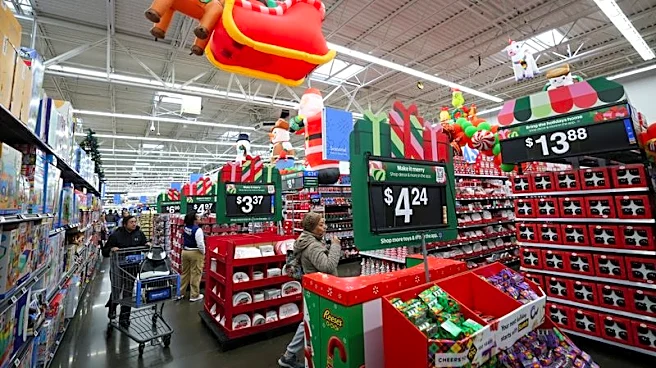
distinction between the two shopping events. Target's Cyber Monday sale is set to begin at 2 a.m. CT, exclusively accessible through Target.com and the Target app, featuring deals on thousands of items. Walmart's Cyber Monday sale will run from November 30 to December 2. According to Mashable, citing Adobe's 2026 holiday forecast, Black Friday typically offers the most significant discounts on large household items, while Cyber Monday tends to have slightly better deals on general electronics, laptops, and digital or gift card promotions.
Why It's Important?
The convergence of Black Friday and Cyber Monday sales periods signifies a significant shift in U.S. retail strategies, impacting both consumers and businesses. For consumers, this extended sales window offers more opportunities to find deals but also creates a more complex shopping landscape, requiring careful comparison to secure the best prices. Retailers are adapting to changing consumer behaviors, where online shopping has become paramount, by extending promotions to capture a larger share of holiday spending. This strategy aims to maximize sales volume over a longer period, potentially reducing the intense single-day rush but increasing competition among e-commerce platforms. The forecast from Adobe highlights a strategic differentiation in discount categories, guiding consumers on where to find the best deals for specific product types.
What's Next?
As the holiday shopping season progresses, consumers can anticipate continued promotional activities from major retailers throughout the extended Black Friday and Cyber Monday period. The emphasis will likely remain on online platforms, with retailers potentially introducing new flash sales or limited-time offers to maintain consumer engagement. Businesses will closely monitor sales data to assess the effectiveness of their extended promotional strategies and adjust future holiday sales plans accordingly. The blurring of Black Friday and Cyber Monday suggests a long-term trend towards a more continuous holiday sales season, potentially leading to further integration of these events in future years. Consumers should remain vigilant for specific deals, particularly for high-demand electronics, which may sell out quickly.
Beyond the Headlines
The evolution of Black Friday and Cyber Monday into a prolonged sales event reflects broader changes in consumer culture and retail technology. The shift from in-store doorbuster events to extended online promotions underscores the dominance of e-commerce and the convenience it offers. This trend also raises questions about the psychological impact on consumers, who are constantly exposed to 'limited-time offers,' potentially leading to purchase fatigue or impulse buying. From an economic perspective, the extended sales period could lead to a more even distribution of holiday spending, but it also intensifies competition among retailers, potentially squeezing profit margins. The strategic differentiation in discounts between Black Friday and Cyber Monday, as noted by Adobe, indicates a sophisticated approach by retailers to segment their offerings and optimize sales across various product categories.