



What's Happening?
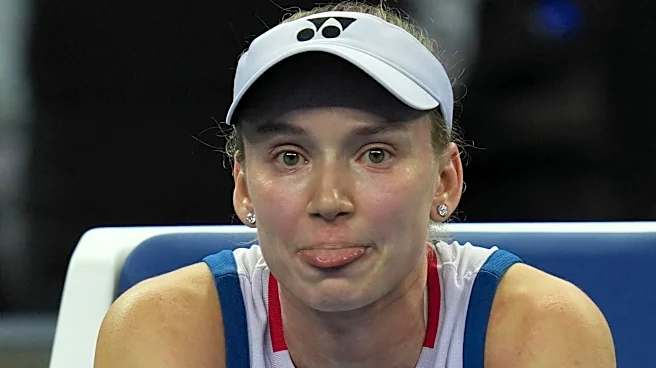
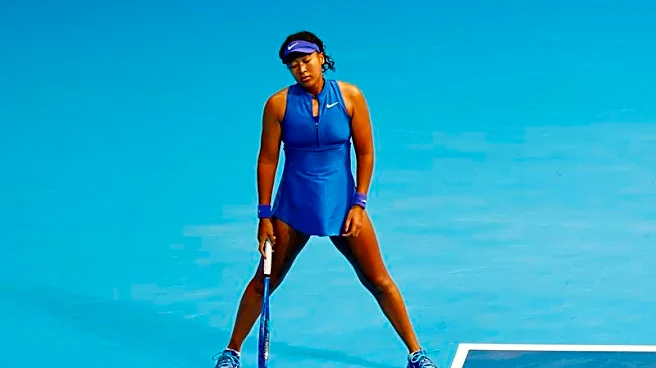
Diana Shnaider, ranked 13th, defeated Leylah Fernandez, ranked 23rd, in the Tokyo final with a score of 6/4, 5/7, 6/2. The match, lasting 2 hours and 18 minutes on a hard court, saw Shnaider recover after Fernandez leveled the match in the second set.
Shnaider's path to the final included four consecutive wins against opponents such as Alexandra Eala, Aliaksandra Sasnovich, and Mia Pohánková. Her recent hard-court performance also features victories over higher-ranked players like Jessica Pegula, Karolina Muchova, and Iva Jovic. Fernandez also had a strong run to the final, securing four straight wins against Elise Mertens, Ekaterina Alexandrova, and Kamilla Rakhimova, and advancing past Elena Rybakina by forfait in the quarter-final. This victory marks a significant achievement for Shnaider, adding to a season that includes wins over Aryna Sabalenka and Madison Keys on clay.
Why It's Important?
This victory for Diana Shnaider in Tokyo is important as it solidifies her position as a rising force in professional tennis, particularly on hard courts. Defeating a top-ranked player like Leylah Fernandez, who had a strong tournament run herself, demonstrates Shnaider's capability to perform under pressure and secure high-value results. For Fernandez, while she made a deep run to the final, the loss means she leaves Tokyo without the title, highlighting the competitive nature of the sport at this level. The outcome impacts the rankings and future tournament seedings for both players, potentially influencing their trajectories in the upcoming season. Shnaider's consistent performance against higher-ranked opponents suggests a potential shift in the competitive landscape of women's tennis, offering new challenges to established players.
What's Next?
Following this victory, Diana Shnaider is expected to see a boost in her ranking and confidence, potentially leading to stronger performances in future tournaments. Her success on hard courts, combined with previous wins on clay, indicates a versatile game that could pose a threat across different surfaces. Leylah Fernandez, despite the loss, will likely continue to be a strong contender in upcoming events, aiming to convert deep runs into titles. Both players will now focus on their training and preparation for the next tournaments on the professional circuit, with Shnaider looking to build on her momentum and Fernandez seeking to rebound from the final defeat. The tennis world will be watching to see if Shnaider can maintain this high level of play and if Fernandez can overcome the challenge of closing out major finals.
Beyond the Headlines
The Tokyo final between Diana Shnaider and Leylah Fernandez underscores the evolving dynamics within professional women's tennis. Shnaider's ability to secure significant wins against established players like Aryna Sabalenka and Madison Keys, in addition to her Tokyo triumph, signals a potential shift in the hierarchy of the sport. This rise of new talent challenges the dominance of long-standing top players, creating a more unpredictable and exciting competitive environment. The mental fortitude displayed by Shnaider in recovering after losing the second set highlights the psychological aspect of high-stakes tennis. For Fernandez, consistently reaching finals but not always winning them could become a critical area for development, focusing on the mental and strategic adjustments needed to secure titles. This ongoing competition among a diverse group of players contributes to the sport's global appeal and growth.