





What's Happening?
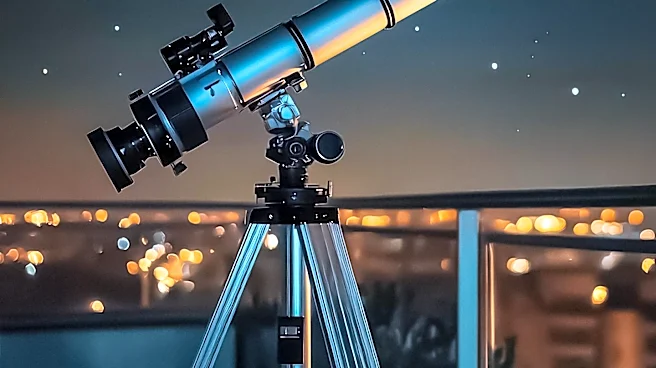
The emergence of budget-friendly smart telescopes like the Dwarf Mini and ZWO Seestar S30 is making astrophotography more accessible to beginners. Priced at $399 each, these devices offer a compact and portable solution compared to traditional, more expensive
telescopes. The Dwarf Mini and Seestar S30 both feature built-in cameras and filters, allowing users to capture celestial images without needing separate equipment. While the Dwarf Mini is noted for its lightweight design, the Seestar S30 offers additional accessories and smart tracking capabilities. Both models provide various shooting modes and post-processing tools, enabling users to enhance their astrophotography skills. These smart telescopes are particularly appealing to those who need to travel to locations with low light pollution for optimal stargazing.
Why It's Important?
The introduction of affordable smart telescopes is significant as it democratizes access to astrophotography, a hobby traditionally limited by the high cost of equipment. By lowering the financial barrier, more individuals can explore and engage with astronomy, potentially fostering a greater public interest in science and space exploration. This accessibility could lead to increased participation in citizen science projects and a broader appreciation for astronomical phenomena. Additionally, the integration of smart technology in these telescopes simplifies the learning curve, making it easier for novices to capture and process high-quality images of the night sky.
What's Next?
As smart telescope technology continues to evolve, we can expect further enhancements in features and capabilities, potentially at even lower price points. This could lead to a surge in amateur astrophotography communities and online platforms where enthusiasts share their work and collaborate on projects. Manufacturers may also expand their product lines to include more advanced models for users who wish to upgrade their equipment as their skills develop. The growing interest in astrophotography could also inspire educational programs and workshops, further promoting science literacy and engagement.