





What's Happening?
In 2000, actor Connor Ratliff was dismissed from the HBO miniseries 'Band of Brothers,' co-created by Tom Hanks and Steven Spielberg, just days before filming was set to begin. Ratliff, who was cast as Private Zielinski, was informed by his agent that
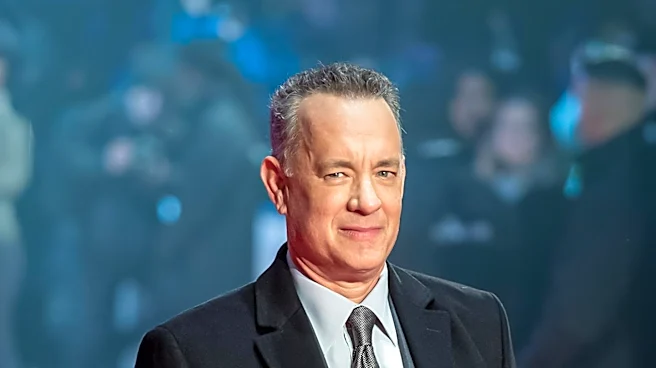
Hanks had concerns, specifically stating that Ratliff had 'dead eyes.' This experience deeply affected Ratliff, leading him to temporarily step away from acting. Over two decades later, in 2022, Ratliff, who had started a podcast titled 'Dead Eyes' to explore similar experiences of rejection in the acting world, had a conversation with Hanks about the incident. During this discussion, Hanks apologized, taking full responsibility for the decision and expressing horror upon learning how his comment had impacted Ratliff. Hanks clarified that the comment was an off-the-cuff remark made in the 'sanctuary' of a casting session and should not have been relayed to Ratliff.
Why It's Important?
This incident highlights the significant power dynamics within the entertainment industry, where a single comment from a prominent figure like Tom Hanks can have a profound and lasting impact on an aspiring actor's career and self-esteem. It underscores the often-unseen emotional toll that rejection and critical feedback can take on individuals in highly competitive fields. The story also brings to light the ethical considerations surrounding communication in professional settings, particularly how feedback is delivered and interpreted. Hanks's eventual apology and acknowledgment of responsibility serve as a rare public example of accountability from a major industry figure, offering a valuable lesson on empathy and the potential for unintended consequences of casual remarks. For actors and those in creative professions, it validates the struggles faced and emphasizes the importance of resilience in the face of setbacks.
What's Next?
The public discussion of this event, particularly through Ratliff's 'Dead Eyes' podcast and Hanks's apology, could encourage more open dialogue within the entertainment industry about the treatment of emerging talent and the impact of critical feedback. It might prompt studios and production companies to review their communication protocols during casting and production to ensure more constructive and less damaging interactions. For Connor Ratliff, the resolution of this long-standing issue could bring a sense of closure and potentially elevate the profile of his podcast, further exploring the human side of the acting profession. The incident also serves as a cautionary tale for those in positions of power, reinforcing the need for careful consideration of their words and actions, as they can have far-reaching effects on others' careers and well-being.
Beyond the Headlines
The 'dead eyes' comment and its aftermath delve into the subjective nature of artistic judgment and the psychological impact of such assessments. In creative fields, evaluations can often feel deeply personal, blurring the lines between professional critique and personal attack. This story illuminates the vulnerability of artists who put their essence into their work, making them susceptible to comments that can undermine their confidence. Furthermore, the two-decade gap between the incident and the apology highlights the enduring nature of emotional wounds and the power of reconciliation. It also speaks to the evolving culture of accountability, where past actions, even those seemingly minor at the time, can be revisited and addressed years later, reflecting a broader societal shift towards greater transparency and empathy in professional relationships. The narrative ultimately underscores the human element behind the glitz and glamour of Hollywood, revealing the personal struggles and triumphs that shape careers.