

What's Happening?
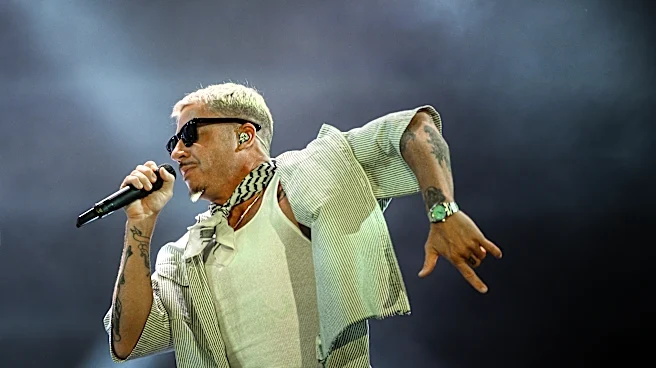
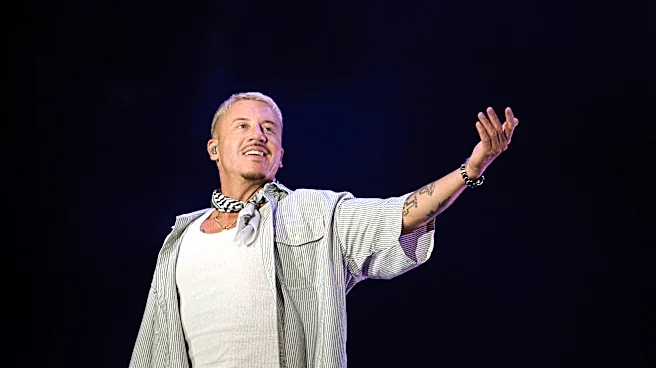
Michael Rapaport has publicly criticized rapper Macklemore for his pro-Palestinian messages and performance of the anti-Israel song 'Hind's Hall' while opening for Ed Sheeran at MetLife Stadium in East Rutherford, New Jersey. Macklemore, 43, repeatedly
chanted 'Free Palestine' and delivered a speech advocating for Palestine during the concerts on Friday and Saturday nights. Rapaport, 56, a Jewish actor and vocal pro-Israel advocate, labeled Macklemore a 'clown' and questioned Ed Sheeran's decision to allow such political messaging. Macklemore's performance included displaying footage from Gaza, pro-Palestinian protests, and images of Israeli soldiers on stadium screens. The song 'Hind's Hall' is inspired by the 2024 pro-Palestinian campus demonstrations and references Hamilton Hall at Columbia University, which was renamed in honor of a Palestinian girl killed in the Israel-Gaza conflict. Macklemore also called for the freedom of other countries and criticized U.S. Immigration and Customs Enforcement (ICE). This is not the first time Macklemore has faced backlash for his political statements, having previously spoken at a pro-Palestinian rally in Washington, D.C., in November 2023 and stating, 'I don’t know enough. But I know enough that this is a genocide.'
Why It's Important?
This event highlights the increasing intersection of entertainment and geopolitical issues, particularly the Israel-Hamas conflict, which continues to be a deeply divisive topic in the U.S. and globally. The backlash against Macklemore from figures like Michael Rapaport and some concertgoers underscores the challenges artists face when using their platforms for political advocacy, potentially alienating segments of their audience. The incident also brings into focus the responsibilities of headlining artists and venues in managing the content presented by opening acts, as Ed Sheeran has also faced criticism for allowing Macklemore to perform again after the initial backlash. This situation reflects broader societal tensions where public figures are increasingly expected to take stances on complex global events, leading to both support and significant opposition. The call for Macklemore's removal from Sheeran's tour by the Israeli-American Council further illustrates the real-world impact of such performances on public opinion and advocacy efforts by various groups.
What's Next?
The Israeli-American Council has launched a petition calling for Macklemore to be removed from Ed Sheeran’s remaining tour dates, indicating continued pressure on Sheeran and his management. It remains to be seen whether Sheeran or his team will respond to this petition or alter Macklemore's involvement in future concerts. Macklemore is expected to continue opening for Sheeran during the U.S. leg of the 'Loop Tour,' suggesting further opportunities for him to express his views, which could lead to more public reactions and debates. The incident may also prompt other artists and concert organizers to re-evaluate their policies regarding political content during performances. The ongoing public discourse surrounding artists' roles in political activism is likely to intensify, with both supporters and critics of Macklemore's stance continuing to voice their opinions on social media and other platforms.
Beyond the Headlines
This incident delves into the complex ethical and cultural dimensions of artistic freedom versus audience expectations and the potential for political messaging to overshadow the primary purpose of an entertainment event. It raises questions about the role of celebrities in shaping public discourse on sensitive international conflicts and the extent to which their platforms should be used for activism. The strong reactions from both sides—those who praise Macklemore for using his voice and those who feel alienated by the political content—underscore a growing polarization within society. This event also highlights the power of social media in amplifying both support and criticism, rapidly turning a concert performance into a national debate. The long-term implications could include a shift in how artists approach political statements in their performances, potentially leading to more explicit political engagement or, conversely, a more cautious approach to avoid alienating diverse fan bases.