




What's Happening?
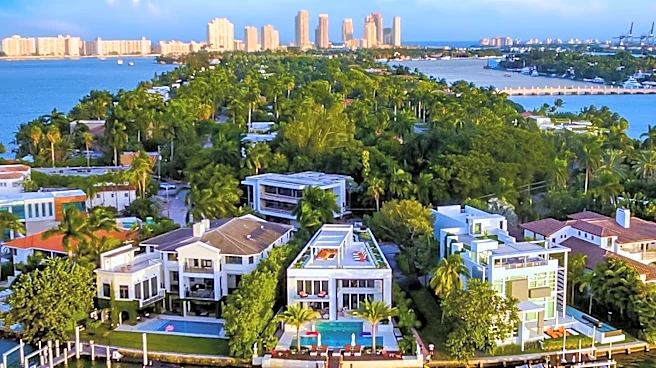
Media mogul Barry Diller is noted as a resident on Miami Beach's North Bay Road, an upscale area experiencing a significant real estate boom. High-end spec-home developer Todd Michael Glaser is currently constructing a mansion on this coveted strip, a project
anticipated to set a new Miami-Dade County record with an asking price potentially exceeding $300 million. Glaser and his partner, Jarrett Posner’s Posner Group, acquired the 2.34-acre site for $105 million last year. This development is part of a broader trend where South Florida's ultraluxury market has seen an influx of wealth, initially from the Northeast during the COVID-19 pandemic and subsequently from Silicon Valley. The current county record was established earlier this year by Mark Zuckerberg's $170 million purchase on Indian Creek Island. Glaser's venture represents a substantial bet on the continued growth of this exclusive real estate sector, despite broader economic uncertainties and concerns about an AI bubble.
Why It's Important?
The mention of Barry Diller residing in this exclusive Miami Beach area underscores the significant appeal of South Florida to high-net-worth individuals, including prominent figures in media and business. This trend has profound implications for the U.S. luxury real estate market, particularly in South Florida, driving up property values and attracting substantial investment. The record-breaking aspirations of developers like Todd Michael Glaser indicate a robust demand for ultraluxury properties, suggesting that the region is perceived as a stable and desirable asset class for the wealthy. This influx of capital and high-profile residents can stimulate local economies through increased spending on services, retail, and other luxury goods. However, it also raises concerns about affordability and accessibility for the broader population, potentially exacerbating wealth disparities and altering the socio-economic landscape of these communities. The continued growth of this market, even amidst global economic uncertainties, highlights its resilience and unique position within the national real estate landscape.
What's Next?
The ongoing development of ultraluxury properties in Miami Beach, exemplified by Glaser's project, suggests a continued upward trajectory for the region's high-end real estate market. Future developments are likely to push price ceilings even higher, potentially attracting more ultra-wealthy individuals and further solidifying South Florida's status as a premier luxury destination. This could lead to increased competition among developers for prime land, driving up acquisition costs and subsequently the final sale prices of new constructions. Local government and urban planners may face growing pressure to manage the rapid development and its associated impacts, such as infrastructure demands and potential displacement of existing communities. The success or failure of these high-stakes projects will also serve as a barometer for investor confidence in the long-term stability and growth of the luxury market, potentially influencing investment decisions in other high-value real estate markets across the U.S. The market will closely watch whether the anticipated $300 million sale materializes, as it would set a new benchmark for residential property values.
Beyond the Headlines
The concentration of media moguls and other high-net-worth individuals in areas like Miami Beach's North Bay Road reflects a broader societal trend of wealth consolidation and the creation of exclusive enclaves. This phenomenon can lead to significant cultural and social shifts within these communities, as the demands and lifestyles of the ultra-rich influence local services, infrastructure, and even political priorities. The pursuit of record-breaking property values also highlights the symbolic importance of real estate as a status marker and a store of wealth for the global elite. Ethically, the rapid escalation of luxury property prices in desirable locations raises questions about equitable development and the potential for displacement of long-term residents or businesses that cannot keep pace with the rising cost of living. Legally, such high-value transactions often involve complex financial structures and can attract scrutiny regarding transparency and potential impacts on local tax bases. Culturally, the presence of prominent figures like Barry Diller can further enhance the allure of these locations, creating a self-reinforcing cycle of desirability and exclusivity.