


What's Happening?
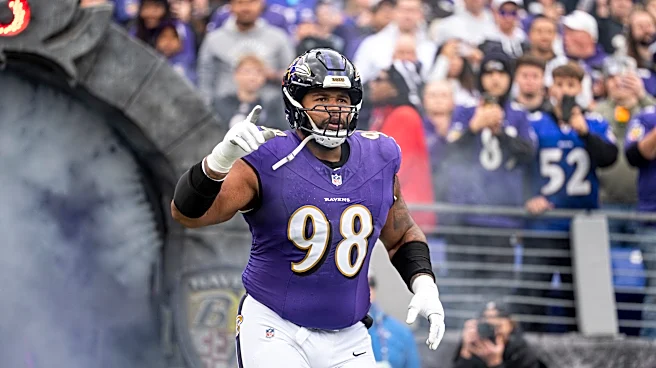
The Baltimore Ravens NFL team is owned by Ravens Enterprises LLC, a private holding entity primarily controlled by Steve Bisciotti. Bisciotti, who is also the co-founder of Aerotek, a major staffing and recruiting firm, acquired the controlling interest
in the team in 2004 from the estate of Art Modell. He now holds the majority voting power and serves as the managing owner of the franchise. The corporate structure of Ravens Enterprises LLC utilizes a series of limited liability companies to manage the team, stadium rights, and regional media partnerships, a common practice among NFL franchises for liability and tax management. The Modell family retains a minority legacy stake in the ownership group.
Why It's Important?
The ownership structure of the Baltimore Ravens, with Steve Bisciotti as the principal owner, is significant for several reasons. As a private entity, Ravens Enterprises LLC's financial operations are not publicly traded, meaning that profits from stadium operations, media rights, sponsorships, and ticket sales flow directly to the private ownership group. This model is typical across the NFL, where a small group of private investors holds the entire equity of a franchise. The team's valuation, estimated at approximately $4.3 billion, places it among the top 15 most valuable teams in the league, highlighting the substantial economic impact and asset value of NFL franchises. The NFL's governance rules, including league approval for ownership groups and financial transparency through salary caps and revenue sharing, ensure a degree of stability and competitive balance within the league, despite the private ownership model.
What's Next?
The Baltimore Ravens will continue to operate under the current ownership structure, with Steve Bisciotti maintaining his role as controlling owner and chairman of Ravens Enterprises LLC. The team's front office and football operations, led by a president and general manager, will continue to report directly to the ownership group. The team's home stadium, M&T Bank Stadium, will remain owned by the State of Maryland and leased to the team, which manages its operations and naming rights revenue. The existing long-term regional television deals with NFL broadcast partners and sponsorship agreements with major brands will continue to contribute to the team's annual revenue. The ownership group is expected to continue reinvesting a portion of these earnings into player salaries, stadium upgrades, and community initiatives, consistent with past practices.
Beyond the Headlines
The private ownership model prevalent in the NFL, exemplified by the Baltimore Ravens, has broader implications for the sports industry and local economies. While it allows for centralized decision-making and long-term strategic planning without the pressures of public shareholders, it also means that the substantial financial gains generated by these franchises primarily benefit a select group of individuals. The significant valuation of the Ravens underscores the immense economic power of professional sports teams, which act as major businesses and cultural institutions. The reliance on public funds for stadium infrastructure, such as M&T Bank Stadium being owned by the State of Maryland, also raises questions about the balance between private profit and public investment in professional sports. This dynamic highlights the complex interplay between sports, business, and civic responsibility in the U.S.