
What's Happening?
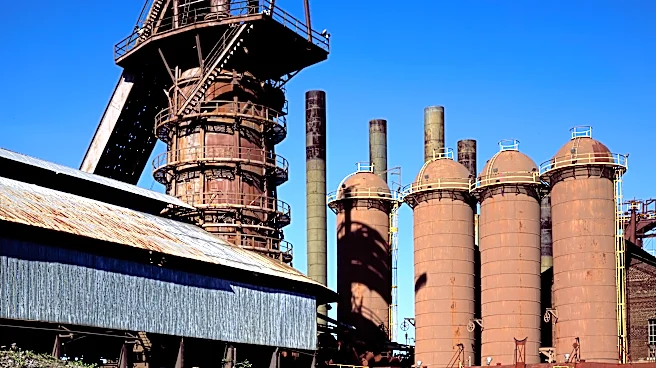
Nippon Steel, the new owner of U.S. Steel, is investing $350 million to reline Gary Works’ 50-year-old Blast Furnace 14 in Northwest Indiana. This repair will extend the furnace's operation, burning coal
through the 2040s. Similarly, Cleveland-Cliffs plans to reline a blast furnace at Burns Harbor in 2027. These decisions come as Northwest Indiana's integrated mills, which produce approximately one in five tons of U.S. steel, face scrutiny over their coal-based blast furnaces being significant sources of air, water, and soil pollution. Despite these commitments to coal-fired operations in Indiana, Nippon Steel is simultaneously constructing a $1.9 billion Direct Reduced Iron (DRI) facility in Arkansas, and Hyundai Steel is building a $5.8 billion DRI-fed plant in Louisiana, indicating a move towards cleaner steelmaking technologies elsewhere. A recent Indiana University Environmental Resilience Institute report suggests that direct steel employment in Northwest Indiana could decline significantly by 2034 under current trends, but modernization could sustain stronger long-term employment.
Why It's Important?
The commitment by Nippon Steel and Cleveland-Cliffs to continue operating coal-fired blast furnaces in Northwest Indiana through the 2040s has significant implications for the region's environment, public health, and economy. These furnaces are major contributors to pollution, raising concerns among local residents, health advocates, and environmental groups. The decision also highlights a disparity in investment strategies, as both Nippon Steel and other steelmakers are investing in cleaner DRI technology in other states. This could lead to Northwest Indiana falling behind in the transition to modern, sustainable steel production, potentially impacting long-term job security and economic competitiveness. The community's desire for a voice in these decisions, as emphasized by Industrious Labs, underscores the growing demand for cleaner industrial practices and local engagement in economic development strategies.
What's Next?
The graduation of the Clean Steel Community Cohort, comprising steelworkers, faith leaders, educators, and residents, signals a growing organized effort to advocate for cleaner steelmaking in Northwest Indiana. These community members are now equipped with advocacy and organizing skills to influence future decisions regarding the region's steel industry. Their focus will likely be on pressuring Nippon Steel to allocate the remaining $2.2 billion of its Gary Works pledge towards DRI technology, rather than solely maintaining coal-fired operations. The contrast between investments in coal-based furnaces in Indiana and DRI facilities elsewhere may intensify calls for policy changes and corporate accountability. Future discussions will likely involve local government, industry leaders, and community groups as they navigate the balance between economic stability, environmental protection, and public health.
Beyond the Headlines
The decisions by Nippon Steel and Cleveland-Cliffs to extend the life of coal-fired blast furnaces in Northwest Indiana reveal a broader tension between economic legacy and environmental innovation in heavy industry. While these investments maintain existing infrastructure and jobs in the short term, they also perpetuate reliance on polluting technologies, potentially hindering the region's transition to a green economy. This situation raises ethical questions about corporate responsibility towards communities impacted by industrial pollution, especially when cleaner alternatives are being adopted elsewhere. The long-term implications could include increased health disparities in fenceline communities, a slower pace of technological adoption in the U.S. steel sector compared to global competitors, and potential economic disadvantages if the industry fails to adapt to evolving environmental standards and market demands for sustainable products. The community's organized response highlights a growing trend of local activism demanding a seat at the table in industrial planning.