


What's Happening?
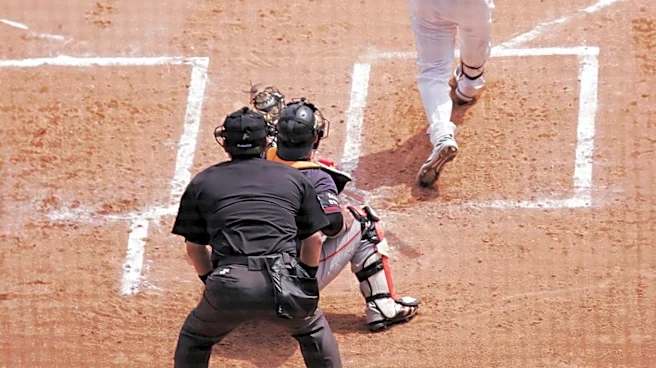
On September 13, 1998, Chicago Cubs outfielder Sammy Sosa hit his 61st and 62nd home runs of the season at Wrigley Field. These two home runs allowed Sosa to tie St. Louis Cardinals slugger Mark McGwire, both surpassing Roger Maris' long-standing single-season
record of 61 home runs. Sosa ultimately finished the 1998 season with 66 home runs. However, McGwire went on to hit 70 home runs that year, setting a new record. Just three years later, Barry Bonds of the San Francisco Giants further eclipsed this record by hitting 73 home runs. All three players—Sosa, McGwire, and Bonds—have faced accusations of using performance-enhancing steroids during their careers.
Why It's Important?
The 1998 home run chase between Sammy Sosa and Mark McGwire captivated the nation, revitalizing baseball after a period of fan disillusionment following the 1994 strike. Their pursuit of Roger Maris' record brought unprecedented attention and excitement to the sport, creating a memorable chapter in baseball history. The race symbolized a golden era of power hitting, drawing in millions of viewers and generating immense media coverage. However, the subsequent accusations of steroid use against Sosa, McGwire, and Barry Bonds cast a long shadow over these achievements. This controversy led to widespread debates about the integrity of the game, the use of performance-enhancing drugs, and the validity of historical records, fundamentally altering how these iconic seasons are viewed by fans and historians alike. It also prompted significant changes in MLB's drug testing policies.
What's Next?
The records set by Sosa, McGwire, and Bonds remain in the MLB record books, but they are often discussed with an asterisk due to the steroid era. Major League Baseball has implemented stricter drug testing policies since then, aiming to prevent future controversies. The debate over how to acknowledge or contextualize these records continues among baseball fans, writers, and the Hall of Fame voters. Future generations of players will continue to chase these home run totals, but any player approaching them will likely face intense scrutiny regarding their performance and any potential use of banned substances. The legacy of the 1998 home run chase will forever be intertwined with the broader narrative of the steroid era in baseball.
Beyond the Headlines
The 1998 home run chase transcended sports, becoming a cultural phenomenon that reflected broader societal issues. It highlighted the public's fascination with record-breaking achievements and the heroes who accomplish them. However, the subsequent revelations about steroid use forced a re-evaluation of heroism and fair play in sports. This era sparked critical discussions about the pressures on athletes to perform, the role of governing bodies in ensuring fair competition, and the ethical responsibilities of athletes themselves. The controversy also contributed to a more cynical view of professional sports, where extraordinary performances are sometimes met with suspicion rather than pure admiration. The legacy of Sosa, McGwire, and Bonds serves as a cautionary tale about the pursuit of greatness at any cost and the lasting impact of ethical breaches on historical narratives.