







What's Happening?
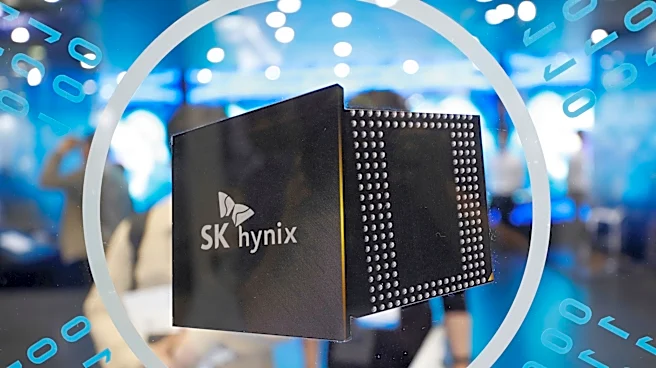
South Korean semiconductor company SK Hynix has successfully raised $26.5 billion through its initial public offering (IPO) on the U.S. stock market, marking the largest IPO by a foreign company in American history. This surpasses the previous record
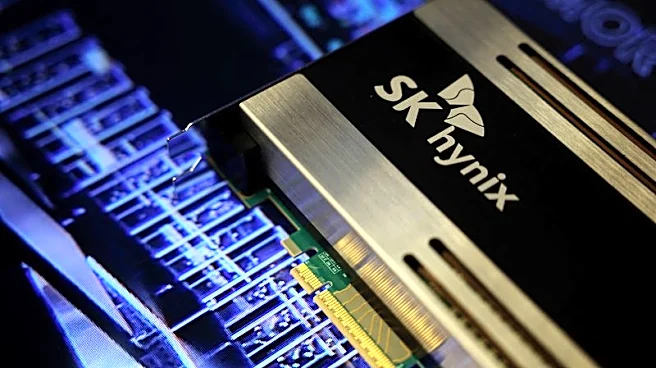
set by Alibaba in 2014. The IPO was met with significant investor interest, with demand reportedly seven times higher than the available shares. SK Hynix's shares were listed on the Nasdaq exchange, and the stock price increased by 14% on the first day of trading. The company's success is largely attributed to its leadership in producing High Bandwidth Memory (HBM), which is essential for AI chips. NVIDIA, a major player in the AI industry, relies on SK Hynix for its GPU memory needs. The funds raised from the IPO will be used to build a new factory in South Korea, establish a chip packaging facility, and purchase advanced EUV scanners for semiconductor production.
Why It's Important?
The successful IPO of SK Hynix highlights the growing global demand for AI technologies and the critical role of semiconductor companies in this sector. As AI systems become more prevalent, the need for high-performance memory chips like those produced by SK Hynix is increasing. This development underscores the strategic importance of the semiconductor industry in the global technology race. Additionally, the U.S. government is actively encouraging foreign semiconductor companies to establish manufacturing facilities in the United States to bolster domestic production capabilities. This aligns with broader efforts to strengthen the U.S. semiconductor supply chain and reduce reliance on foreign manufacturing, which is crucial for national security and economic stability.
What's Next?
Negotiations are currently underway between the U.S. government and South Korean companies, including SK Hynix and Samsung, to build new semiconductor factories on American soil. This move is part of a strategic initiative to enhance the U.S. semiconductor manufacturing base. The U.S. Secretary of Commerce has been actively involved in discussions with industry representatives to facilitate this transition. As these negotiations progress, the outcome could significantly impact the global semiconductor market, potentially affecting the price and availability of electronic devices and server equipment. The establishment of new manufacturing facilities in the U.S. could also create numerous jobs and contribute to economic growth.