




What's Happening?
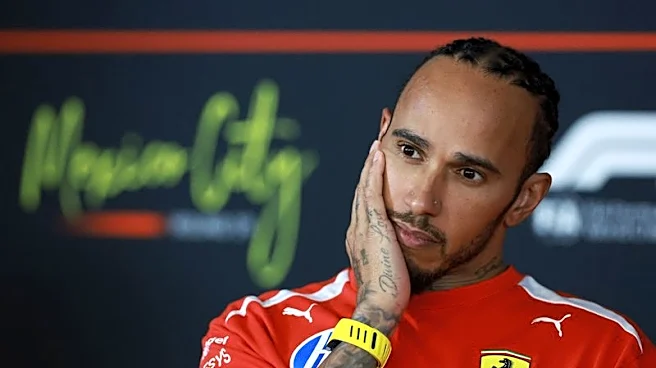
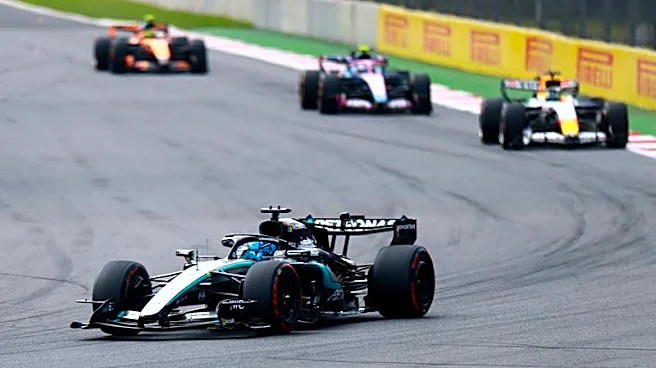
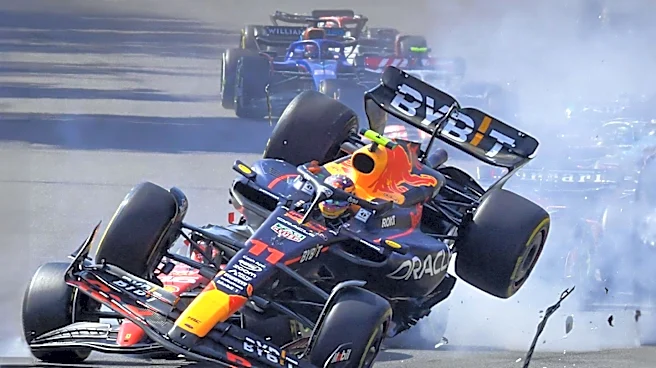
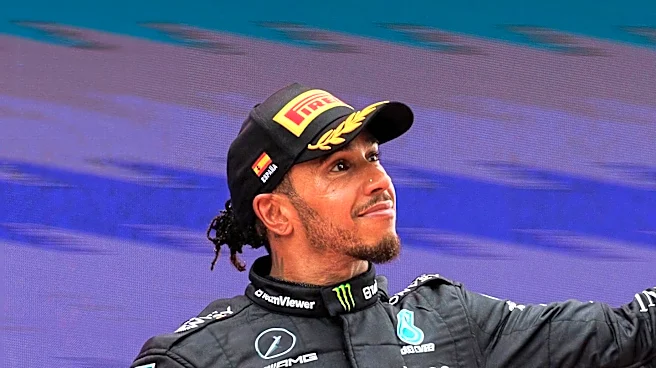
Lewis Hamilton has called for 'serious talks' within the Ferrari team after an on-track incident with his teammate Charles Leclerc during the Mexico City Grand Prix. The clash, which occurred on the opening lap, saw both Ferrari drivers go wide, allowing
Red Bull's Max Verstappen to gain positions and ultimately win the race. Hamilton, who started on pole, finished second, while Leclerc received a five-second penalty for cutting a corner and finished fourth. Hamilton expressed significant frustration, stating that the incident cost the team a potential victory and that 'something needs to change.' Ferrari Team Principal Frederic Vasseur also voiced his disappointment, suggesting a lack of 'respect' for the team's efforts and sponsors. This is not the first time Hamilton and Leclerc have had on-track altercations since becoming teammates in 2025, with Hamilton previously demanding 'rules of engagement' after a similar incident at the Italian Grand Prix.
Why It's Important?
This internal conflict at Ferrari carries significant implications for the team's performance and championship aspirations. A lack of clear team orders or understanding between drivers can lead to lost points, jeopardizing their standing in the Constructors' Championship and individual drivers' title bids. For a team like Ferrari, which carries immense historical weight and fan expectations, such incidents can erode morale within the organization and among its global fanbase. The public nature of Hamilton's demands for 'serious talks' highlights a potential breakdown in communication or strategy, which could impact future race outcomes and the team's ability to effectively compete against rivals like Red Bull. The situation also puts pressure on team management to establish clear guidelines for on-track conduct to prevent similar occurrences, which are detrimental to the team's overall success and image.
What's Next?
Following the Mexican Grand Prix, discussions are expected to take place within Ferrari management and between the drivers, Lewis Hamilton and Charles Leclerc, to address the on-track incident. Team Principal Frederic Vasseur has indicated that these discussions will focus on 'respect' and the collective goals of the team. The outcome of these talks could lead to the implementation of clearer 'rules of engagement' or team orders for future races, particularly as the Formula 1 season progresses. The team will need to quickly resolve these internal issues ahead of the upcoming Sao Paulo Grand Prix to ensure a united front and maximize their performance. The reactions from both drivers and the team's subsequent performance in Brazil will be closely watched by fans and media, as it will indicate whether the internal conflict has been effectively managed or if tensions persist.
Beyond the Headlines
The recurring on-track clashes between Lewis Hamilton and Charles Leclerc at Ferrari highlight a deeper challenge often faced by top-tier Formula 1 teams: managing the competitive instincts of two highly ambitious drivers within a team structure. While individual rivalry can sometimes push performance, it can also become detrimental when it compromises team objectives, as seen in Mexico. This situation raises questions about team dynamics, leadership, and the balance between individual glory and collective success. The ethical dimension involves the drivers' responsibility to the hundreds of team members and sponsors who contribute to their efforts. Legally, driver contracts often include clauses about acting in the team's best interest, which could be invoked in extreme cases. Culturally, Ferrari has a passionate fanbase that expects unity and success, making internal strife particularly damaging to the team's image and legacy. The long-term implications could include shifts in driver relationships, team management strategies, and potentially even future driver lineups if the issues remain unresolved.