





What's Happening?
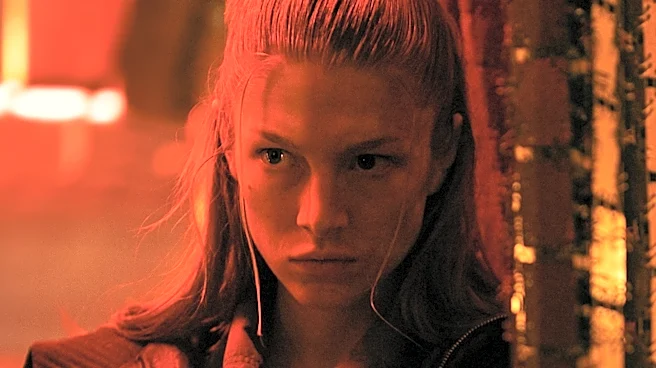
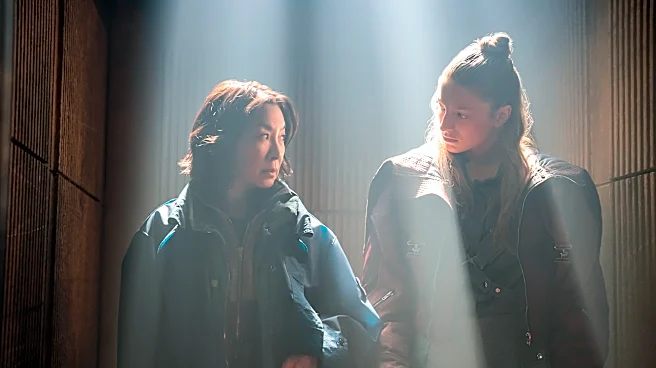
Showrunner Silka Luisa has provided insights into the upcoming Prime Video series 'Blade Runner 2099,' set 50 years after 'Blade Runner 2049.' The series depicts a Los Angeles rebuilding after a war, with replicants in control and humanity struggling
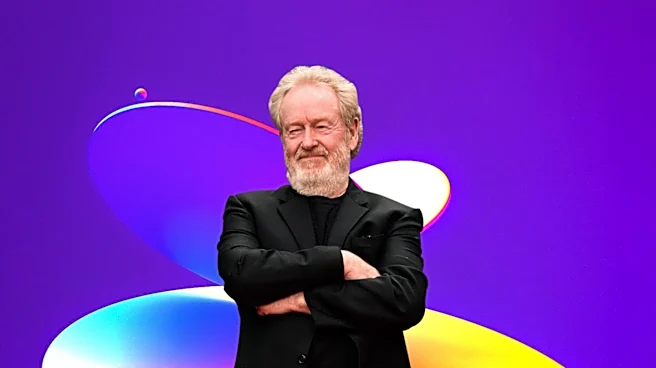
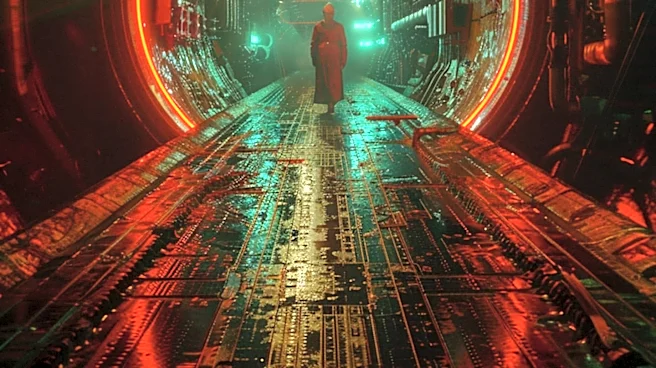
to adapt. Starring Hunter Schafer as Cora, a human on the run, and Michelle Yeoh as Olwen, a replicant, the show explores themes of humanity and empathy. Luisa discussed her approach to the franchise, including her concept of 'sunshine noir' to differentiate the visual style from previous installments, featuring a hotter and more oppressive atmosphere. She also shared a surprising revelation from Ridley Scott regarding the geography of the 'Blade Runner' universe, which challenged her own assumptions. Luisa emphasized that the core idea of Philip K. Dick's original novel—that empathy separates humans from machines—remains central to 'Blade Runner 2099.'
Why It's Important?
The development of 'Blade Runner 2099' signifies the continued expansion of a seminal science fiction franchise, impacting the landscape of streaming content and potentially influencing future sci-fi narratives. Silka Luisa's vision, particularly her 'sunshine noir' aesthetic and focus on humanity's struggle in a replicant-dominated world, offers a fresh perspective on established themes, which could resonate with a broad audience and critics. The involvement of Ridley Scott, even in a consultative capacity, underscores the enduring legacy and creative influence of the original creators on subsequent adaptations. Luisa's emphasis on empathy as a central theme is particularly relevant in contemporary discussions about artificial intelligence and the definition of consciousness, making the series a potential platform for exploring complex philosophical questions through popular entertainment. The series' production in Prague, utilizing practical design and existing architecture, highlights innovative approaches to world-building in large-scale productions.
What's Next?
'Blade Runner 2099' is scheduled to premiere on Prime Video on November 25. The series will introduce new characters and expand the 'Blade Runner' universe, potentially setting the stage for further installments or spin-offs depending on its reception. Viewers can anticipate a continuation of the franchise's tradition of ambiguous endings, as Luisa indicated her preference for leaving certain questions unanswered, consistent with the original films. The show's exploration of empathy and the human-replicant dynamic is expected to spark discussions among fans and critics, contributing to the ongoing discourse surrounding artificial intelligence and its implications. The creative choices made in 'Blade Runner 2099,' such as the 'sunshine noir' aesthetic, could influence future science fiction productions in terms of visual storytelling and thematic depth.
Beyond the Headlines
Silka Luisa's personal motivation for exploring the 'end of our species' and her anxieties as a parent about the future of the world add a profound layer to 'Blade Runner 2099.' This personal connection suggests that the series is not merely an entertainment product but a reflection of contemporary societal fears and hopes regarding technological advancement and humanity's place in the future. The decision to center the series on two women, Cora and Olwen, rather than another male detective, represents a significant shift in narrative focus for the franchise, potentially offering new perspectives on power, agency, and survival in a dystopian future. The philosophical underpinnings of the series, particularly the re-emphasis on Philip K. Dick's concept of empathy, invite deeper contemplation on what truly defines humanity in an increasingly technologically advanced world, prompting audiences to consider their own understanding of consciousness and compassion.