



What's Happening?
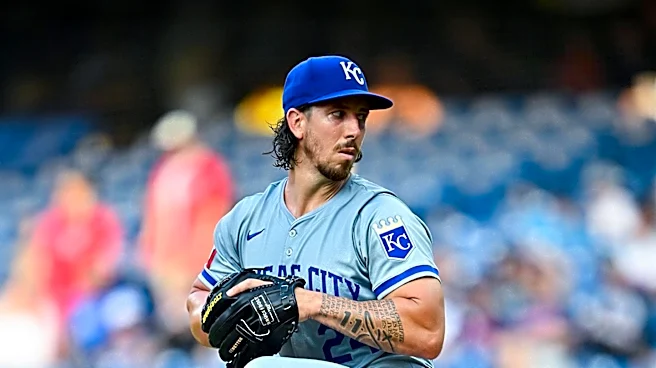
The Atlanta Braves have made several strategic acquisitions during the 2026 MLB trade deadline, aiming to strengthen their roster for the remainder of the season. Key trades include acquiring outfielder Lane Thomas and left-handed pitcher Bailey Falter
from the Kansas City Royals, right-handed pitcher Tyler Mahle from the San Francisco Giants, and left-handed pitcher Brent Suter from the Los Angeles Angels. Additionally, the Braves traded for right-handed pitcher Duncan Davitt from the Chicago White Sox and exchanged outfielder Eli White for right-handed pitcher Tyler Uberstein. These moves have sparked a range of reactions from Braves fans, with opinions varying from negative to neutral. The trades are seen as attempts to bolster the team's chances for a successful postseason run, although some fans remain skeptical about the effectiveness of these changes.
Why It's Important?
The trade deadline is a critical period for MLB teams to reassess their strategies and make necessary adjustments to their rosters. For the Atlanta Braves, these trades represent an effort to enhance their competitive edge as they aim for a successful postseason. The acquisition of players like Lane Thomas and Tyler Mahle could provide the team with additional depth and versatility, potentially improving their performance in key games. However, the mixed reactions from fans highlight the uncertainty and pressure faced by the team's management to deliver results. The success of these trades will ultimately depend on how well the new players integrate into the team and contribute to its overall performance.
What's Next?
As the Braves move forward with their updated roster, the focus will be on integrating the new players and optimizing team dynamics. The management will closely monitor the performance of the acquired players to ensure they meet the team's strategic goals. Fans will be watching closely to see if these trades translate into improved results on the field. The upcoming games will be crucial in determining the effectiveness of these roster changes and the team's prospects for the postseason. The Braves' management may also consider further adjustments if the current strategy does not yield the desired outcomes.
Beyond the Headlines
The trade deadline decisions reflect broader trends in MLB, where teams are increasingly relying on analytics and strategic planning to make informed decisions. The Braves' approach to the trade deadline underscores the importance of balancing immediate needs with long-term goals. The mixed fan reactions also highlight the emotional investment of sports fans and the impact of management decisions on team morale and public perception. As the season progresses, the Braves' management will need to navigate these dynamics carefully to maintain fan support and achieve their competitive objectives.