









What's Happening?
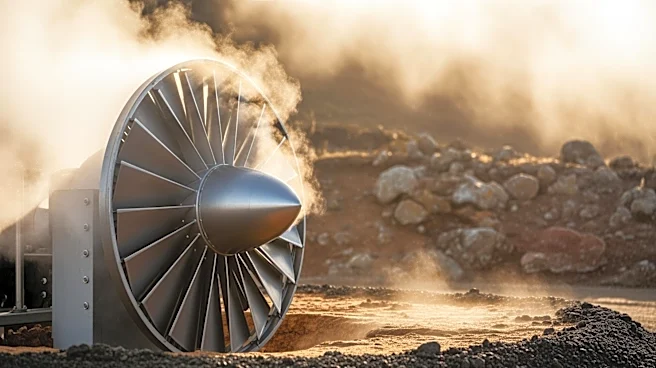
The geothermal energy sector is gaining attention as a potential cornerstone of the modern power grid, driven by its carbon-free and always-on capabilities. The International Energy Agency projects that global investment in next-generation geothermal could
reach $1 trillion by 2035. Enhanced geothermal systems (EGS), which create artificial underground reservoirs, are at the forefront of this development. However, there is also significant potential in naturally occurring geothermal resources, which have been largely unexplored. A recent Stanford study indicates that nearly half of the U.S.'s operating geothermal fields were discovered accidentally, and less than 10% of the western U.S. has been sampled for subsurface temperatures. This suggests that millions of acres of potentially high-value land remain untested, offering a substantial opportunity for expansion.
Why It's Important?
The exploration and development of geothermal energy could significantly impact the U.S. energy landscape by providing a reliable and sustainable power source. As utilities face increasing power demand and price volatility, geothermal energy offers a stable alternative that could reduce reliance on fossil fuels. The potential discovery of vast geothermal reserves could lead to a reappraisal of the energy mix, with geothermal playing a more prominent role. This shift could also drive down project financing costs, making geothermal competitive with solar and wind energy. The development of geothermal resources could also stimulate economic growth by creating jobs in exploration, drilling, and plant operation.
What's Next?
The future of geothermal energy in the U.S. will likely involve increased exploration and investment in both enhanced and conventional geothermal systems. As AI and advanced drilling techniques improve, the likelihood of discovering new geothermal fields increases, potentially unlocking thousands of gigawatts of energy. This could lead to a significant expansion of geothermal capacity, positioning it as a key component of the U.S. energy strategy. Stakeholders, including investors and policymakers, will need to focus on supporting technological advancements and regulatory frameworks that facilitate geothermal development.
Beyond the Headlines
The development of geothermal energy also raises important environmental and regulatory considerations. As exploration expands, there will be a need to balance energy development with environmental protection, particularly in sensitive areas. Additionally, the integration of geothermal energy into the existing power grid will require updates to infrastructure and regulatory policies. The success of geothermal energy could also influence global energy strategies, as other regions with geothermal potential look to the U.S. as a model for development.