
What's Happening?
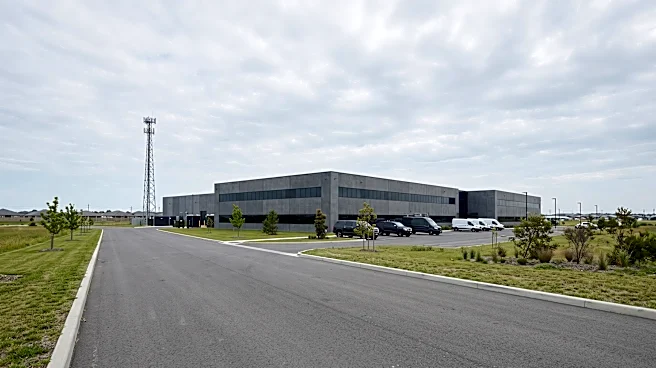
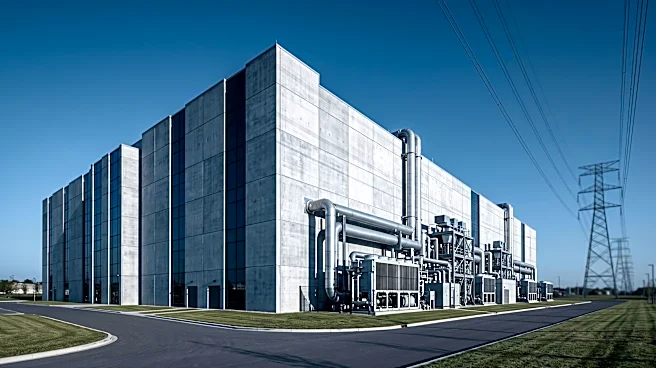
Residents in Kenilworth, New Jersey, are actively protesting the ongoing construction of a massive $1.8 billion artificial intelligence (AI) data center by the cloud computing company CoreWeave. The community's
concerns primarily revolve around the potential environmental and quality-of-life impacts of the facility. Residents fear increased electricity and water usage, pollution, and noise, which they believe will negatively alter their town. Local business leaders, however, contend that these concerns are exaggerated and that New Jersey's stringent permitting process addresses any potential issues. This local dispute in Kenilworth mirrors similar conflicts occurring across the United States, where community members often feel their voices are not being adequately heard as AI infrastructure development rapidly expands.
Why It's Important?
This protest highlights a growing tension between rapid technological advancement, specifically in AI and cloud computing, and local community concerns about environmental impact and quality of life. The construction of large data centers, while crucial for supporting the digital economy and AI development, demands significant resources, particularly electricity and water. This can strain local utilities and raise environmental questions, especially regarding carbon footprint and water scarcity. The conflict in Kenilworth underscores the challenge of balancing economic development and technological progress with the preservation of local environments and community well-being. It also brings to light the perceived disconnect between corporate interests and local residents' concerns, suggesting a need for more transparent communication and community engagement in the planning and approval processes for such large-scale projects.
What's Next?
The protest in Kenilworth is ongoing, with residents continuing to voice their opposition and demand action from their elected representatives. The outcome of this specific dispute could influence future data center developments in New Jersey and potentially other states. It may lead to increased scrutiny of environmental impact assessments, stricter permitting requirements, or more robust community benefit agreements for such projects. Local and state officials will likely face pressure to mediate between the developer and the residents, potentially exploring solutions that mitigate the perceived negative impacts. The broader trend of AI infrastructure expansion suggests that similar conflicts are likely to emerge in other communities, prompting a need for more comprehensive regulatory frameworks and public engagement strategies for technological development.
Beyond the Headlines
The Kenilworth protest touches upon deeper implications concerning the societal integration of advanced technology. The rapid expansion of AI and cloud computing infrastructure is transforming landscapes and resource demands, often in ways that local communities are unprepared for. This situation raises ethical questions about who benefits from technological progress and who bears its costs. It also highlights the challenge of democratic participation in decisions that have significant long-term environmental and social consequences, especially when those decisions are driven by global technological trends. The conflict could catalyze a broader movement for 'tech-responsible' development, where environmental and social impact assessments are given equal weight to economic benefits. Ultimately, the debate in Kenilworth is a microcosm of the larger societal challenge of managing technological growth in a way that is sustainable, equitable, and respectful of local communities.