




What's Happening?
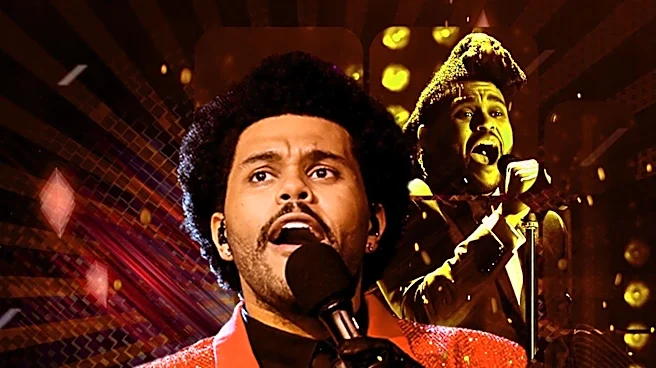
The Weeknd has released an official video for his track 'Hong Kong,' which features Chinese supermodel Ming Xi. The song, initially launched as an Asia exclusive, has achieved significant success on streaming platforms in China, topping major charts in the
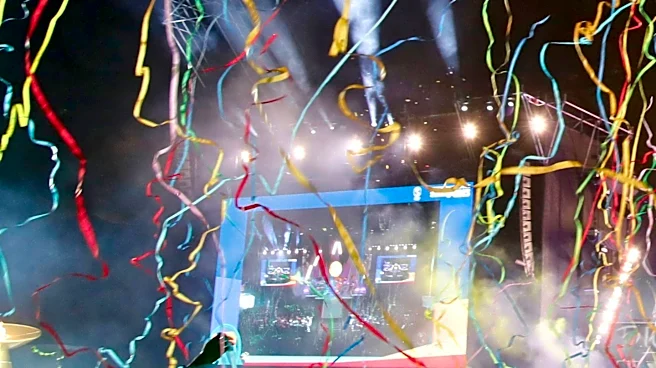
region. Its popularity has also boosted Faye Wong's 1993 classic 'Monsoon,' which the track samples. Earlier this year, The Weeknd performed a four-night residency at Kai Tak Stadium in Kowloon, where he debuted the song live on the first night, generating considerable fan excitement. The new video was directed by Evan Larsen.
Why It's Important?
The success of 'Hong Kong' in the Chinese market highlights the growing influence of global music artists in specific regional markets and the potential for cross-cultural collaborations to achieve widespread appeal. The track's ability to top major charts in China demonstrates the artist's expanding international reach and the effectiveness of tailored releases for specific audiences. Furthermore, the song's sampling of Faye Wong's 'Monsoon' and the subsequent boost in its popularity illustrate how contemporary music can reintroduce classic works to new generations, creating a ripple effect in the music industry and potentially generating renewed interest in older catalogs.
What's Next?
The release of the official video for 'Hong Kong' is likely to further amplify the track's visibility and success, particularly in Asian markets. This strategic move could lead to increased streaming numbers and potentially inspire more artists to consider region-specific releases and collaborations. The continued success of 'Hong Kong' may also encourage The Weeknd to explore more international collaborations and targeted content, solidifying his global presence and potentially influencing other artists to adopt similar strategies for market penetration.
Beyond the Headlines
The phenomenon of 'Hong Kong's' success, coupled with its sampling of a classic Chinese song and the inclusion of a Chinese supermodel in its video, points to a broader trend of cultural exchange and globalization in the entertainment industry. This approach not only broadens an artist's audience but also fosters a deeper connection with diverse cultural landscapes. It underscores the evolving nature of music consumption and production, where artists are increasingly leveraging global platforms and local cultural elements to create universally appealing content, blurring geographical and cultural boundaries in the process.