





What's Happening?
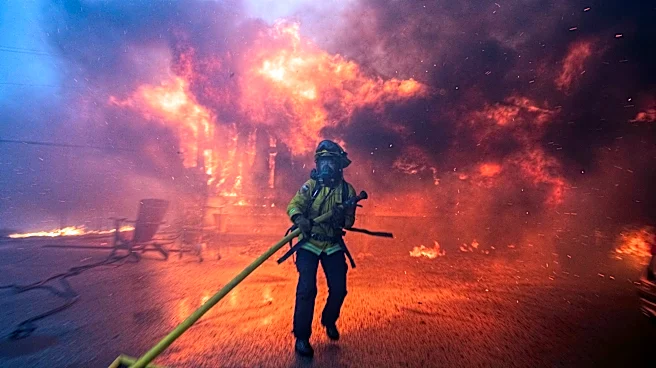
Gracie Abrams, an artist from Los Angeles, has released a new album titled 'Daughter from Hell,' which includes a ballad addressing climate catastrophe. The song, described as haunting and anthemic, reportedly focuses on the Palisades Fire, resilience,
and the challenges of coming of age amidst climate change. Abrams, who grew up in the Pacific Palisades, reflects on the experience of peers losing their childhood homes due to such events. Her lyrics convey a sense of disillusionment and the struggle to live in extreme conditions, while also highlighting the importance of making sound and finding ways to cope. This album is part of a growing trend in 2026 where numerous artists are incorporating climate breakdown and environmental themes into their music, signaling a potential cultural shift in how these issues are processed and communicated.
Why It's Important?
The emergence of Gracie Abrams' climate-themed ballad, alongside a surge of similar music from other artists, signifies a crucial development in public discourse surrounding climate change. Music serves as a powerful medium for communication, capable of touching lives in ways that traditional news and policy discussions often cannot. This artistic engagement can foster emotional connections and understanding, potentially mobilizing broader public awareness and action. For U.S. society, this trend suggests a cultural inflection point where the impacts of climate-fueled disasters, such as wildfires and rising sea levels, are increasingly being processed and expressed through art. This could lead to greater public pressure on policymakers and industries to address environmental concerns, as artists like Abrams translate complex issues into relatable human experiences, influencing public sentiment and potentially shaping future policy debates.
What's Next?
Gracie Abrams is scheduled to tour her new album this winter, with several performances in Los Angeles during the week of December 14. It is anticipated that her song, 'Humming,' will resonate particularly strongly with local audiences, many of whom are still recovering from the Eaton and Palisades fires that devastated the region two years prior. This tour provides a platform for Abrams to further amplify her message on climate change and connect with fans on a deeply personal level. The continued integration of climate themes into popular music by artists like Abrams and others suggests that this trend will likely grow, potentially leading to more widespread public engagement and discussion about environmental issues in the coming years. This artistic movement could also inspire other cultural figures to use their platforms for similar advocacy.
Beyond the Headlines
The increasing presence of climate change themes in popular music, as exemplified by Gracie Abrams' new album, highlights a deeper cultural and psychological response to environmental crises. Beyond direct advocacy, this artistic expression reflects a collective processing of grief, anxiety, and resilience in the face of ecological challenges. It underscores the idea that art can serve as a vital outlet for individuals and communities grappling with the emotional toll of climate change, offering solace, validation, and a sense of shared experience. This trend also raises questions about the role of artists in social and political movements, demonstrating their capacity to shape narratives and influence public consciousness in ways that traditional media or scientific reports might not. The nuanced approach of artists like Abrams, who use metaphor and emotional storytelling rather than explicit scientific terms, suggests a more profound and accessible way of engaging with complex environmental issues.