



What's Happening?
Eastern African countries are accelerating cross-border electricity trade through a $1.6 billion World Bank-backed integration program. Ethiopia is set to double its power exports to Kenya, increasing from 200 megawatts (MW) to 400 MW by December. A joint
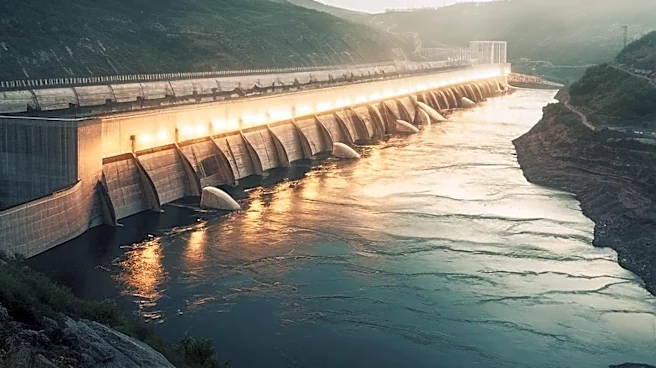
technical committee is overseeing trial operations and grid-stability preparations for this increase. Ethiopia is also supplying 100 MW to Tanzania on a pilot basis, with regular exports anticipated after upgrades to the Kenya-Tanzania transmission network are completed. Over the past decade, Ethiopia's electricity exports have grown by 31%, now constituting between 6.5% and 10% of its national generation. The country aims to achieve 5,000 gigawatt-hours (GWh) of annual electricity exports by 2030 and plans new cross-border transmission links with South Sudan, Somalia, and Somaliland, in addition to existing corridors involving Djibouti and Sudan.
Why It's Important?
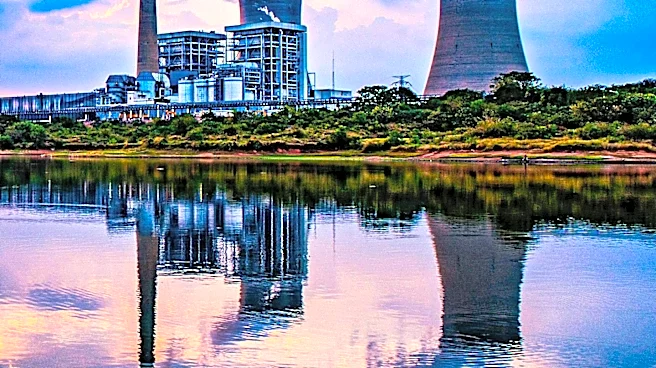
This initiative is crucial for Eastern Africa's economic development and energy security. The increased cross-border electricity trade, particularly from Ethiopia's surplus hydropower, will lower energy costs and improve reliability for businesses and households across the region. This aligns with the World Bank's Regional Energy Transmission, Trade and Decarbonization Programme for Eastern Africa (RETRADE-EA), which aims to increase regional electricity trade and connect countries currently outside the main grid. The project also supports the broader Mission 300 initiative by the World Bank and African Development Bank, targeting first-time electricity access for 300 million Africans by 2030. By displacing costlier thermal generation with clean hydropower, the program is projected to avoid approximately 25.8 million tonnes of carbon dioxide emissions, contributing significantly to climate change mitigation efforts in the region.
What's Next?
The implementation of the 10-year RETRADE-EA program will continue, with a focus on financing cross-border transmission and market reforms. The Uganda-Tanzania Interconnector Project (UTIP), backed by $250 million from the World Bank's International Development Association (IDA), will be a key component of the first phase, building 260 kilometers of 400-kV transmission line. This will facilitate electricity exchanges between Uganda and Tanzania, expected to reach at least 452 GWh annually by 2031. Efforts will also be directed towards fully operationalizing the Eastern Africa Power Pool Day-Ahead Market, despite ongoing governance and technical disagreements. The program also seeks to attract private capital for Independent Transmission Projects, easing pressure on public budgets and ensuring the long-term sustainability of the regional power infrastructure. The success of these initiatives will be critical for achieving broader energy access and economic growth targets in Eastern Africa.
Beyond the Headlines
Beyond the immediate economic and environmental benefits, this power trade initiative has profound implications for regional integration and stability in Eastern Africa. By fostering interdependence through shared energy resources, it can potentially reduce conflicts and enhance diplomatic ties among member states. The development of a robust regional electricity market could also attract further foreign investment, stimulating economic growth and job creation across various sectors. However, challenges remain, particularly in resolving governance and technical disagreements within the Eastern Africa Power Pool (EAPP) to ensure the efficient operation of the market. The project also highlights the critical role of international financial institutions like the World Bank in catalyzing large-scale infrastructure development and promoting sustainable energy solutions in developing regions, ultimately contributing to broader socio-economic progress and climate resilience.