


What's Happening?
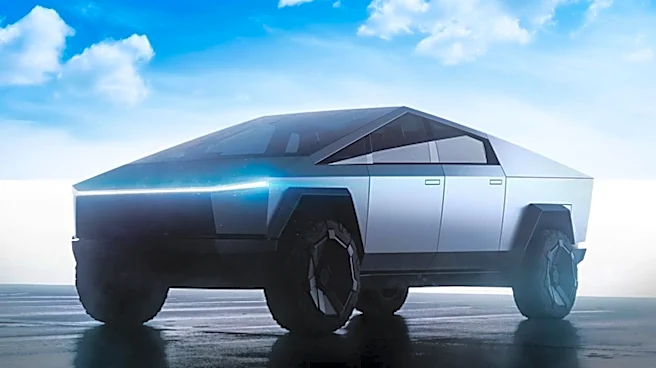
Tesla has begun inviting 'select customers' to purchase its Cybercab for personal use, following its initial introduction as a robotaxi service. While the upfront cost is $29,990, there is an additional monthly subscription fee of $300, which Tesla CEO
Elon Musk has acknowledged as 'too high.' The Cybercab's functionality is currently limited by geofencing, meaning it can only operate in specific cities within Texas and Florida due to regulatory approvals for fully self-driving vehicles. Prominent tech reviewer Marques Brownlee, who lives in New York, has placed an order despite these limitations and the fact that the estimated delivery time is December, potentially invalidating a previous bet he made regarding the Cybercab's availability. Tesla is actively ramping up production and operations, suggesting a future expansion of availability and regulatory approval.
Why It's Important?
The limited release of the Tesla Cybercab for personal use marks a significant step in the evolution of autonomous vehicles, transitioning from a conceptual robotaxi service to a consumer product. However, the high monthly subscription cost and geographical restrictions present substantial barriers to widespread adoption. Elon Musk's admission that the monthly fee is 'too high' indicates a recognition of this challenge and suggests potential future adjustments to make the Cybercab more accessible. This development is crucial for the U.S. automotive industry as it tests the waters for consumer-owned self-driving cars, pushing regulatory bodies to adapt to new transportation paradigms. The success or failure of this initial rollout will provide valuable insights into consumer willingness to pay for advanced autonomous features and the practicalities of integrating such vehicles into daily life, particularly concerning insurance, liability, and urban infrastructure.
What's Next?
Tesla is expected to continue its efforts to expand the operational areas for the Cybercab as regulatory approvals for fully self-driving cars become more widespread across the U.S. This will involve ongoing engagement with state and local governments to address concerns related to safety, infrastructure, and legal frameworks. The company will likely evaluate the feedback from its 'select customers' and the market's reaction to the current pricing model. Given Elon Musk's comments, there is a strong possibility that Tesla will revise the monthly subscription fee to make the Cybercab more attractive to a broader consumer base, potentially aligning it with the cost of Full Self-Driving (FSD) and connectivity for other Tesla models. Future developments will also focus on scaling up production to meet anticipated demand once geographical and financial barriers are reduced, aiming for a more general public release.
Beyond the Headlines
The introduction of the Cybercab for personal use, even with its current limitations, raises profound questions about the future of personal transportation and urban planning. The concept of a self-driving vehicle that can be owned but is geographically restricted challenges traditional notions of vehicle ownership and mobility. It highlights the complex interplay between technological advancement, regulatory frameworks, and consumer behavior. Ethically, the deployment of autonomous vehicles on public roads brings forth discussions about safety protocols, algorithmic decision-making in critical situations, and data privacy. Culturally, the Cybercab could redefine how individuals interact with their vehicles and how cities are designed, potentially reducing the need for personal parking spaces and altering traffic patterns. The long-term implications could include a shift towards subscription-based mobility services, impacting car ownership models and the automotive industry's traditional sales structures.