




What's Happening?
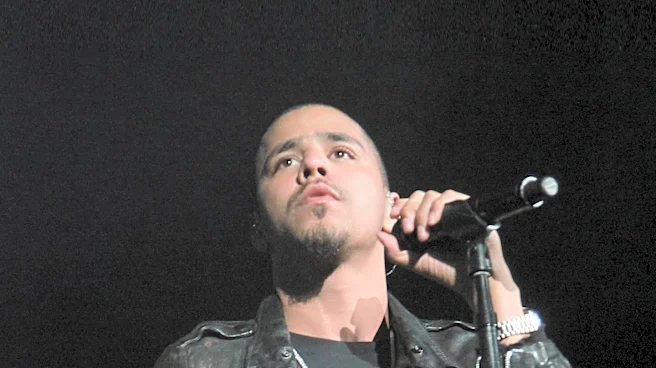
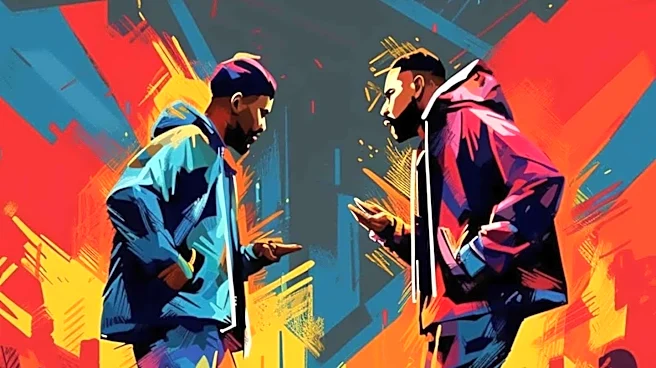
50 Cent, in a recent episode of The Crew Has It podcast, stated his belief that J. Cole 'paid the most' by choosing to withdraw from the competitive rap battle between Kendrick Lamar and Drake. According to 50 Cent, opting out of such competition goes
against the fundamental culture of hip-hop. He emphasized that competition is an integral part of the genre. Despite this assessment, 50 Cent expressed admiration for J. Cole, highlighting his unique approach to fame and his grounded lifestyle, noting Cole's confidence is not tied to material possessions. J. Cole had initially released a diss track titled '7 Minute Drill' aimed at Kendrick Lamar in 2024 but subsequently removed it from streaming platforms and publicly apologized to Lamar during Dreamville Fest, citing his respect and love for both artists. This withdrawal effectively cleared the path for the direct confrontation between Drake and Kendrick Lamar.
Why It's Important?
This commentary from 50 Cent underscores the significant role of competition and lyrical prowess within hip-hop culture. His perspective suggests that an artist's willingness to engage in rap battles is often seen as a measure of their commitment to the genre's traditions and their standing among peers. J. Cole's decision to retract his diss track and apologize, while potentially seen as a move towards peace, is interpreted by some as a departure from the expected competitive spirit, which could influence perceptions of his artistic courage or strategic positioning within the industry. This event highlights the delicate balance artists must maintain between personal values, industry expectations, and fan engagement, especially in a genre where 'beefs' can significantly impact careers and public image. The incident also reveals the differing philosophies among prominent figures regarding the essence of hip-hop, with 50 Cent advocating for competition as a core tenet.
What's Next?
The long-term implications of J. Cole's decision to withdraw from the rap battle will likely continue to be debated within hip-hop circles. While 50 Cent believes Cole 'paid the most,' the impact on Cole's career and public perception remains to be fully seen. Artists and fans may continue to analyze whether his move was a sign of maturity and respect or a missed opportunity to assert dominance. This situation could influence how other artists approach similar competitive scenarios in the future, potentially leading to more strategic considerations about engaging in or abstaining from public feuds. The ongoing discussion about the role of competition in hip-hop culture is expected to persist, with various artists and commentators offering their views on what constitutes a 'win' or 'loss' in such high-stakes musical confrontations.
Beyond the Headlines
Beyond the immediate competitive aspect, J. Cole's actions and 50 Cent's commentary touch upon deeper themes of authenticity, artistic integrity, and the pressures of superstardom in the music industry. Cole's preference for 'normalcy in the middle of superstardom' and his detachment from material displays of wealth challenge conventional narratives of success in hip-hop. His apology and withdrawal could be interpreted as a prioritization of personal values and artistic relationships over the aggressive, often confrontational, demands of rap beefs. This raises questions about whether the culture of competition, while historically significant, might be evolving to accommodate different forms of artistic expression and personal conduct. The incident also highlights the power of influential figures like 50 Cent to shape public discourse and set expectations for artist behavior within the genre.