






What's Happening?
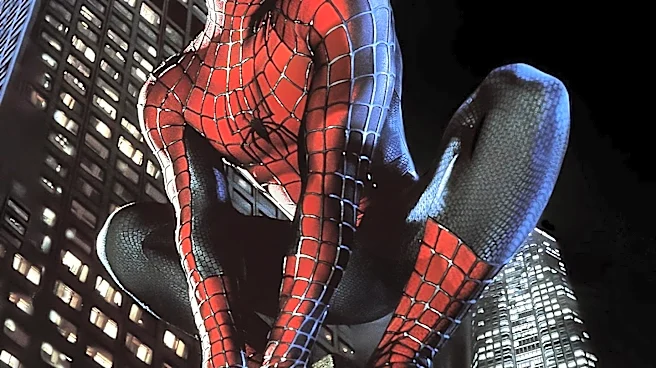
An original movie poster for the 2002 film "Spider-Man," starring Tobey Maguire and Kirsten Dunst, was recalled shortly after its release due to two significant issues. The primary reason for the recall was the poster's depiction of the Twin Towers reflected
in Spider-Man's eyes, which became highly sensitive following the September 11th, 2001, national tragedy. Additionally, the studio failed to secure permission from Chrysler to feature their building in the poster's design, contributing to the decision to pull the artwork. This recalled poster is a 1 Sheet (27 x 39.75 inches) and was released before 9/11. There are variations of this poster, including international and domestic versions, with authentication often relying on the visibility of a yellow taxi in the lower-left quadrant and the poster's high gloss finish.
Why It's Important?
This incident highlights the profound impact of real-world events, particularly national tragedies, on media and marketing strategies. The immediate recall of the poster demonstrates the entertainment industry's sensitivity to public sentiment and the need to avoid imagery that could be perceived as insensitive or exploitative during times of national mourning. Furthermore, the issue with the Chrysler Building underscores the critical importance of intellectual property rights and securing proper permissions for commercial use of landmarks or corporate assets in promotional materials. This event serves as a case study in crisis management within the film industry and the complex legal and ethical considerations involved in movie marketing, influencing how studios approach promotional content in the wake of significant societal events.
What's Next?
The recalled "Spider-Man" poster has become a collector's item due to its rarity and historical context, making it a valuable piece for movie memorabilia enthusiasts. For the film industry, this event reinforced the need for rigorous review processes for all promotional materials, especially in a rapidly changing global landscape. Future movie marketing campaigns are likely to continue exercising extreme caution regarding sensitive imagery and ensuring all necessary legal clearances are obtained before public release. The incident also contributes to the ongoing discussion about the intersection of art, commerce, and societal responsibility, particularly in how media reflects and responds to major historical moments.
Beyond the Headlines
Beyond the immediate recall, this story touches upon the broader cultural memory and the way traumatic events reshape public perception and artistic expression. The Twin Towers, once symbols of New York City's skyline, became inextricably linked to the 9/11 attacks, rendering their casual depiction in entertainment problematic. This shift in symbolism forced a re-evaluation of how such landmarks are used in popular culture. The incident also subtly reflects the power of collective grief and how it can influence corporate decisions, demonstrating that public sentiment can override pre-planned marketing strategies. It serves as a reminder of the delicate balance between creative freedom and social responsibility, particularly when dealing with imagery that carries significant emotional weight for a nation.