





What's Happening?
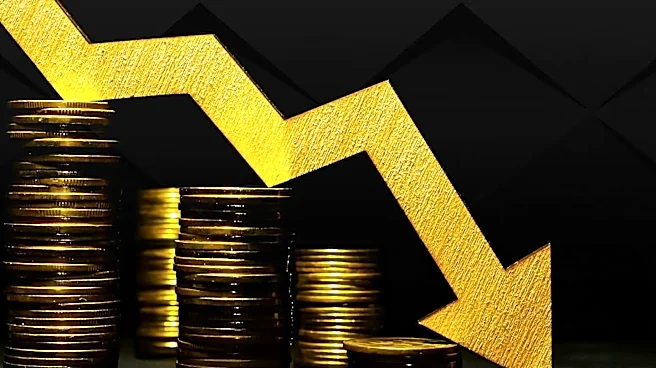
Equinox Gold Corp. (EQX) experienced a 5.98% drop in its stock price, trading at $9.27, down from its previous close of $9.86. This decline is primarily attributed to a significant fall in bullion prices, with spot gold sliding approximately 2% to around
$3,757 an ounce, marking its lowest level since September 2025. The company, a Vancouver-based senior gold producer with operations in Canada, the United States, Mexico, and Brazil, saw its shares affected by a sector-wide de-rating of precious metals equities rather than any specific company announcement. Other major gold miners like GDX, AEM, KGC, and NEM also saw declines. This downturn follows a period where Equinox Gold reported record revenue of $1.0 billion and adjusted EPS of $0.19 in its third-quarter results on November 9, but management guided full-year 2026 production to the low end of its range and all-in sustaining costs to the high end.
Why It's Important?
The decline in Equinox Gold Corp.'s stock, driven by a broader gold market downturn, highlights the sensitivity of gold mining companies to fluctuations in commodity prices and macroeconomic factors. For U.S. investors and the broader financial market, this event underscores the impact of Federal Reserve commentary and interest rate expectations on non-yielding assets like gold. Hawkish statements from New York Fed President John Williams and St. Louis Fed President Alberto Musalem, suggesting further rate hikes, have increased the opportunity cost of holding gold. This situation affects not only gold producers but also investors holding gold-backed exchange-traded funds (ETFs) and other precious metals. The amplified effect on gold miners, who typically fall harder than bullion itself due to their leveraged exposure, means that a sustained decline in gold prices could significantly pressure their margins and free cash flow, potentially leading to reduced investment and operational adjustments in their U.S. and international operations.
What's Next?
Investors are closely monitoring the release of the October FOMC minutes, which could either confirm or alter current market expectations regarding aggressive rate hikes, thereby influencing gold prices. Beyond this, the ability of bullion to maintain the $3,750 per ounce level will be a key indicator. Equinox Gold Corp. is also expected to release its 2027 cost and production guidance with its fourth-quarter results early next year, under the leadership of new chief executive Jason Simpson. Analyst sentiment, while generally constructive on valuation, has become more cautious, leading to some target revisions. The company faces two main risks: a sustained rebound in gold prices could quickly restore margin expectations, while a deeper break in the metal or further cost inflation at its Canadian and Brazilian operations could exert additional pressure on its shares.
Beyond the Headlines
The current market dynamics affecting Equinox Gold Corp. and the broader gold sector reveal deeper implications concerning the interplay between monetary policy, commodity markets, and investor behavior. The Federal Reserve's hawkish stance and the strengthening dollar are not merely financial indicators but reflect a broader economic strategy aimed at controlling inflation, which has ripple effects across various asset classes. For gold, traditionally seen as a safe-haven asset, its recent decline suggests a shift in investor confidence towards higher-yielding assets in a rising interest rate environment. This trend could signal a re-evaluation of investment strategies, potentially leading to a reallocation of capital away from precious metals. Furthermore, the challenges faced by gold miners, including cost inflation and production guidance adjustments, highlight the operational complexities and economic vulnerabilities within the mining industry, impacting employment and regional economies where these operations are located.