








What's Happening?
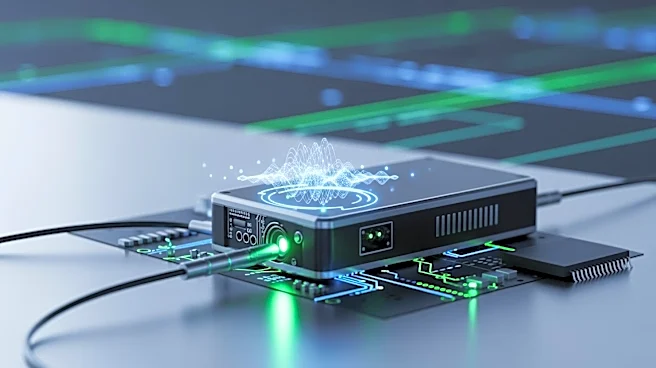
The energy industry is on the brink of a technological transformation with the introduction of quantum sensors, which promise to surpass the limitations of classical sensor platforms. These sensors leverage quantum mechanics to enhance sensitivity, stability,
and measurement capabilities, offering a new level of precision and accuracy. Quantum sensors operate at atomic and subatomic scales, enabling the detection of minute changes in various physical quantities. This advancement is particularly significant for utilities managing aging infrastructure, as it allows for early detection of degradation and anomalies, potentially reducing unplanned outages. The Electric Power Research Institute (EPRI) has highlighted the potential of quantum sensors in a recent paper, emphasizing their role in future energy applications such as fleet optimization and data collection.
Why It's Important?
The integration of quantum sensors into the utility industry could significantly enhance the reliability and efficiency of energy systems. By providing more accurate and detailed data, these sensors can improve asset management and operational safety, offering a strategic advantage to utilities. The ability to operate in harsh environments and reduce maintenance needs further underscores their value. As the energy sector faces increasing demands and challenges, quantum sensors represent a critical tool for innovation and sustainability. Their development and deployment could lead to more resilient infrastructure and support the transition to a more sustainable energy future.
What's Next?
For quantum sensors to become a staple in the utility industry, they must integrate seamlessly with existing systems. This requires standardization, interoperability, and secure data transmission capabilities. As these technologies mature, utilities are encouraged to engage in pilot programs and partnerships to shape standards and guide investments. The continued advancement of quantum communication technologies will further enhance the security and reliability of critical infrastructure sensing, paving the way for widespread adoption.