



What's Happening?
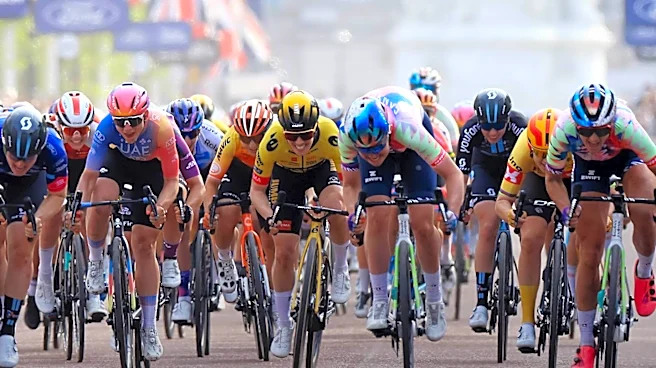
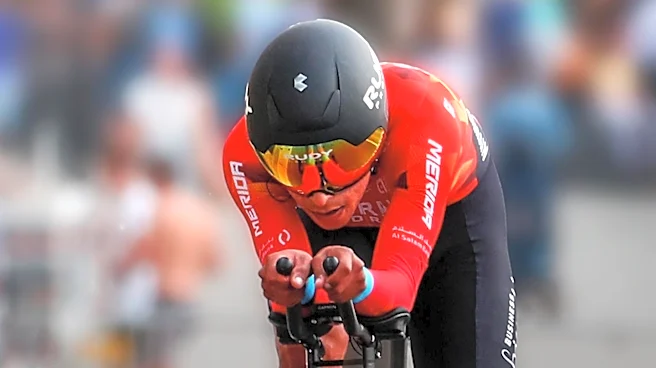
Dutch cyclist Olav Kooij emerged victorious in a dramatic sprint finish during stage five of the Tour de France. The 24-year-old, participating in the event for the first time, managed to outpace Germany's Max Kanter and Belgium's Tim Merlier, who finished
second and third respectively. The stage, which spanned 158.3 kilometers from Lannemezan to Pau, was marked by a crash that disrupted the race dynamics. Despite the chaos, Norway's Torstein Traeen retained the overall leader's yellow jersey, maintaining a 28-second lead over American cyclist Sean Quinn. The stage was particularly significant for Kooij, who had a challenging start to the season due to illness but was a late addition to his team, Decathlon CMA CGM. His victory was a testament to his resilience and the support of his team.
Why It's Important?
Kooij's win is significant as it highlights the unpredictable nature of the Tour de France, where strategic positioning and team support can dramatically alter outcomes. This victory not only boosts Kooij's profile in the cycling world but also underscores the importance of resilience and adaptability in sports. For the teams involved, such victories can enhance sponsorship opportunities and team morale. Additionally, the race dynamics, affected by crashes and strategic sprints, demonstrate the physical and mental demands placed on cyclists, influencing training and preparation strategies for future races.
What's Next?
As the Tour de France progresses, the competition is expected to intensify, with cyclists like Tadej Pogacar and Jonas Vingegaard aiming to close the gap on the current leader, Torstein Traeen. Teams will likely reassess their strategies to navigate the remaining stages, focusing on both individual and team performances. The upcoming stages will test the endurance and tactical acumen of the cyclists, with potential shifts in the general classification standings. Fans and analysts will be keenly observing how the race unfolds, particularly in the mountain stages where significant time gains or losses can occur.