


What's Happening?
Robert Kraft, owner of the New England Patriots, recently appeared on CNBC to discuss the increasing role of private equity in the NFL and the rising valuations of its teams. Ahead of the NFL season opener, Kraft addressed comments from CNBC's Andrew
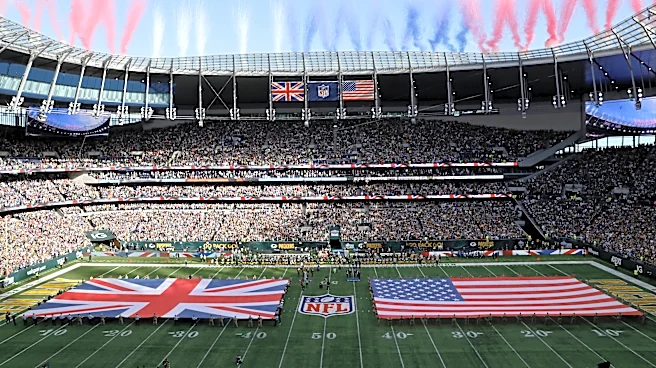
Ross Sorkin regarding the Patriots' fifth-place ranking in the network's latest valuation list. Sorkin suggested that as team valuations continue to climb, more private equity and other investment capital will be necessary to sustain these figures. Kraft expressed a positive view on the introduction of private equity into the league, highlighting that the debt limit for a team is $800 million, with a maximum of $1.5 billion in debt allowed for an acquisition. He also noted that a significant portion of private equity investments comes from pension funds, effectively allowing 'blue-collar people' to participate in team ownership through their retirement assets. Kraft emphasized the NFL's bright future, citing its strong viewership numbers, with over 90 of the top 100 TV programs being NFL-related, and outstanding international development, including nine overseas games across three continents this year.
Why It's Important?
The discussion around private equity and NFL team valuations is significant for several reasons. The increasing financial involvement of private equity firms could reshape the ownership landscape of professional sports, potentially bringing in new capital and investment strategies. This trend reflects the growing economic power and global appeal of the NFL, making team ownership an increasingly exclusive and lucrative venture. The influx of private equity, often backed by pension funds, also means that a broader base of individuals, including working-class people, could indirectly benefit from the league's financial success through their retirement savings. This democratizes, to some extent, the economic gains from professional sports. Furthermore, the comparison to NBA team valuations, where the Lakers' $12.5 billion valuation slightly surpasses the Patriots' $12.25 billion, suggests a potential for even greater upside for NFL teams, driven by their dominant television viewership and expanding international presence. This financial growth underscores the NFL's status as a major economic and cultural institution in the U.S. and globally.
What's Next?
The NFL is likely to continue exploring and potentially expanding the role of private equity in team ownership, given Robert Kraft's positive outlook and the league's robust financial trajectory. As team valuations continue to rise, the league may need to adapt its financial structures to accommodate larger investments and ensure sustained growth. This could involve further adjustments to debt limits or ownership rules to facilitate private equity involvement. The NFL's aggressive international expansion, with nine games scheduled overseas this year, indicates a strategic focus on global market penetration, which is expected to further boost viewership and revenue. This international growth will likely attract even more diverse investment, including from global private equity firms. The league will also continue to leverage its strong domestic viewership, which consistently places NFL games among the most-watched programs, to secure lucrative media rights deals. These factors combined suggest a future where NFL teams become even more valuable assets, attracting sophisticated financial players and potentially leading to new ownership models.
Beyond the Headlines
The increasing integration of private equity into the NFL ownership structure raises deeper questions about the nature of sports ownership and its societal implications. While Kraft highlights the benefit of pension funds allowing 'blue-collar people' to participate in ownership, it also signifies a shift towards a more corporatized and financially driven model for professional sports. This could lead to increased scrutiny over how these investments impact ticket prices, fan experience, and community engagement, as the primary focus might shift further towards maximizing shareholder returns. The global expansion of the NFL, while economically beneficial, also presents cultural and ethical considerations regarding the league's influence and responsibility in diverse international markets. The immense valuations of teams like the Cowboys, despite a long championship drought, underscore the power of brand, marketing, and regional loyalty in the sports economy, suggesting that financial success is not solely tied to on-field performance. This trend could further entrench the NFL as a powerful economic entity, influencing not just sports but also broader financial markets and investment strategies.