






What's Happening?
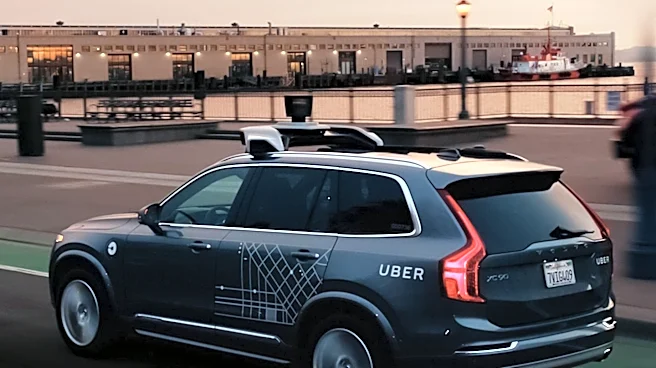
Uber has announced a significant restructuring of its workforce, laying off approximately 10% of its community operations team. This move is part of a broader strategy to integrate artificial intelligence (AI) into its operations. The company is also
requiring remote employees to relocate to cities with Uber offices and work in-person three days a week. According to Megha Yethadka, Uber's vice president of global community operations, AI offers a substantial opportunity to enhance output, quality, and scalability of customer solutions. The layoffs are part of Uber's efforts to streamline operations and embrace AI, joining other companies like Block, IBM, and Snap that have made similar workforce adjustments. Previously, Uber had also reduced its human resources and recruitment staff by 25%, though those cuts were not related to AI.
Why It's Important?
The integration of AI into Uber's operations signifies a shift in how companies are leveraging technology to improve efficiency and reduce costs. By reducing its workforce and focusing on AI, Uber aims to enhance its service delivery and maintain competitiveness in the ride-hailing industry. This move could set a precedent for other companies considering similar strategies, potentially leading to widespread changes in employment patterns across various sectors. The decision to require in-person work also reflects a broader trend of companies reevaluating remote work policies post-pandemic. Stakeholders, including employees and investors, will be closely watching how these changes impact Uber's performance and employee morale.
What's Next?
As Uber continues to integrate AI into its operations, the company may face challenges related to employee adaptation and customer service quality. The requirement for employees to relocate could lead to further workforce adjustments if individuals are unable or unwilling to move. Additionally, Uber's focus on AI may prompt other companies in the industry to accelerate their own technological advancements to remain competitive. The long-term impact on Uber's operational efficiency and market position will depend on the successful implementation of AI and the company's ability to manage the transition effectively.