




What's Happening?
Atlanta has solidified its position as a dominant force in rap music throughout the 21st century, building on a rich history that includes artists like OutKast, Gucci Mane, and Lil Jon. A significant turning point occurred in the early 2010s with the mainstream
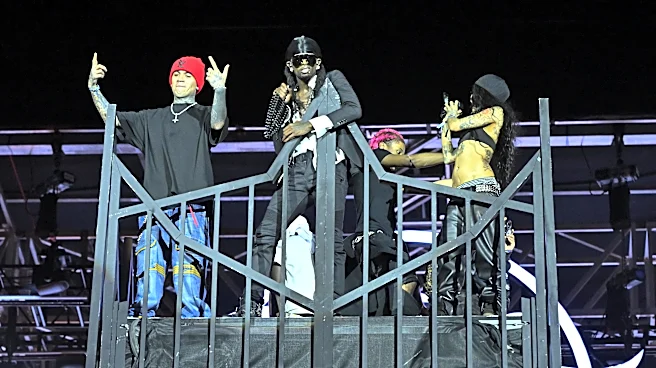
emergence of Atlanta's distinct 'trap' sound. This era introduced artists such as Future, known for his Auto-Tuned delivery; Migos, with their triplet-based vocals; and Young Thug, recognized for his eccentric and elastic vocal style. The mid-2010s saw a second wave of experimentation with artists like Lil Uzi Vert, Playboi Carti, and Lil Yachty, who further diversified trap subgenres. Playboi Carti's rage rap, characterized by its distorted and explosive sound, has become a global reference point for rappers. This continuous evolution has kept trap's vibe-forward sonics at the forefront of rap music for the past decade, attracting a worldwide following and fostering a new generation of artists who are now shaping the city's next chapter in rap.
Why It's Important?
Atlanta's sustained influence on rap music is crucial for the genre's global trajectory and the music industry at large. The city's consistent innovation, particularly with the 'trap' sound, has not only produced numerous chart-topping artists but has also created new subgenres that resonate internationally. This ongoing evolution demonstrates how regional music scenes can become global trendsetters, impacting production styles, vocal delivery, and lyrical themes across the hip-hop landscape. The success of Atlanta-based artists translates into significant economic impact through record sales, tours, merchandise, and related industries, benefiting artists, labels, and local economies. Furthermore, Atlanta's role as a breeding ground for new talent ensures the continuous revitalization and diversification of rap music, preventing stagnation and fostering creative growth within the genre.
What's Next?
The future of Atlanta rap is poised for continued innovation as a new generation of artists emerges, carving out unique sonic identities that blend elements of OG trap, rage rap, and UG music. Mentorship from established figures like Young Thug, who actively promotes new signees, suggests a sustained pipeline of talent. This ongoing evolution will likely lead to further subgenre development and cross-genre experimentation, as artists draw inspiration from diverse musical influences. The city's influence is expected to continue shaping global rap trends, with its vibe-forward sonics remaining a significant reference point for artists worldwide. The music industry will likely continue to look to Atlanta for the next wave of influential sounds and artists, solidifying its status as a perpetual hub for rap music innovation.
Beyond the Headlines
Atlanta's dominance in rap music extends beyond mere commercial success, reflecting deeper cultural and artistic shifts. The city's ability to consistently produce groundbreaking sounds and artists highlights a dynamic creative ecosystem that fosters experimentation and authenticity. This phenomenon underscores the importance of regional cultural hubs in shaping global artistic movements, demonstrating how local experiences and sounds can achieve universal appeal. The evolution of Atlanta rap also reflects broader trends in music consumption and production, where genre boundaries are increasingly fluid, and artists draw from a wide array of influences. This continuous reinvention challenges traditional notions of genre, pushing the boundaries of what rap music can be and influencing popular culture in profound ways, from fashion to language.