






What's Happening?
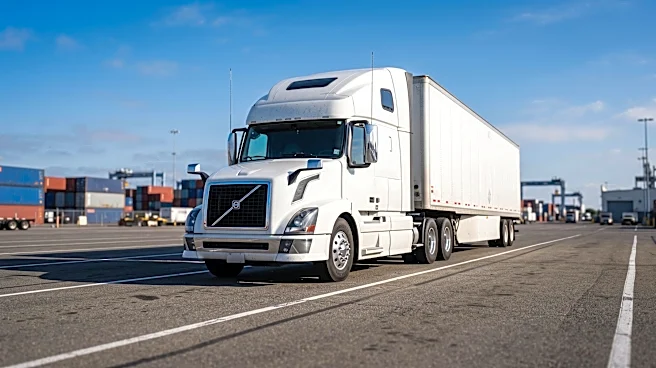
Saia, a logistics and transportation company, is actively expanding its asset-based less-than-truckload (LTL) network across North America. The company utilizes its own fleet of tractors, trailers, and terminals to transport mid-sized freight. This expansion
includes the densification of over 218 facilities that have been added or upgraded since 2022. Saia generates approximately $3.4 billion in revenue from its transportation services, with all reported revenue originating from customers within the United States. The company's strategy involves owning its fleet and terminals, thereby directly carrying the associated liability. This approach is becoming increasingly significant as liability risks within the U.S. trucking industry are on the rise, creating pressure for asset-light logistics platforms and presenting opportunities for asset-based carriers like Saia. The ongoing maturation of Saia's national terminal network is beginning to show improvements in operating ratios at newer sites, which could lead to higher shipment volumes, revenue growth, and better net margins as more terminals reach mature system levels.
Why It's Important?
Saia's operational model, which emphasizes owning its assets and directly managing liability, is becoming increasingly important in the evolving U.S. trucking and logistics sector. As legal and operational risks, particularly concerning liability, become more prominent, companies that maintain direct control over their fleets and terminals are better positioned to manage these challenges. This shift in the industry landscape could favor asset-based carriers over asset-light logistics platforms that rely more heavily on brokers. For investors, Saia's ability to absorb and manage liability directly, coupled with its network scale, means that even small fluctuations in freight density or safety costs can significantly influence investor perception of asset-based carriers. The company's focus on improving operating efficiencies and expanding its network suggests a strategic response to market demands for reliable, asset-based carrier capacity, potentially leading to sustained growth and improved profitability in a higher-liability environment.
What's Next?
The continued expansion and maturation of Saia's national terminal network are expected to drive further improvements in operating ratios, particularly as newer facilities reach optimal operational efficiency. This could lead to increased shipment volumes and revenue growth for the company. As the U.S. trucking industry grapples with rising liability risks, Saia's asset-based model may become even more attractive to shippers seeking reliable and accountable transportation solutions. The company will likely continue to focus on maximizing operating efficiencies and managing discretionary spending to protect its operating ratio, aiming to translate increased revenue into higher net margins. Stakeholders, including investors and industry analysts, will be closely watching how Saia's strategy of direct liability management and network densification translates into financial performance and market share gains in the competitive logistics landscape.
Beyond the Headlines
The broader implications of Saia's strategy extend to the fundamental structure of the U.S. logistics industry. The increasing emphasis on liability and operational control could signal a long-term shift away from purely asset-light models towards a greater appreciation for asset-heavy carriers. This trend might influence regulatory discussions around carrier responsibility and insurance requirements, potentially leading to new industry standards that favor companies with robust asset bases and comprehensive risk management. Furthermore, the focus on network densification and operational efficiency by companies like Saia highlights a drive towards optimizing supply chains for resilience and reliability, which is crucial in an era of unpredictable economic conditions and evolving consumer demands. This could also spur technological advancements in fleet management and safety protocols as carriers seek to mitigate risks and enhance operational performance.