

What's Happening?
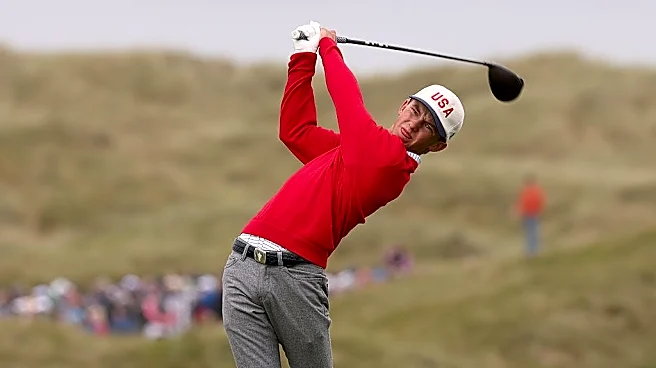
A common golf swing flaw known as the 'chicken wing' can be corrected through several targeted techniques, according to Top 100 Teacher Kellie Stenzel. The 'chicken wing' occurs when the lead elbow bends and points away from the body during the downswing
and follow-through, often leading to inconsistent shots. Stenzel emphasizes that this issue is frequently a compensation for an earlier problem in the swing, meaning a direct attempt to eliminate it without addressing the root cause may not be effective. She outlines five specific methods to help golfers overcome this problem: utilizing a split-hand drill, developing a willingness to hit the ground, shallowing the club path, checking and correcting posture, and maintaining relaxed elbows throughout the swing. These strategies aim to promote proper arm extension and club release, which are crucial for a more effective and consistent golf swing.
Why It's Important?
Correcting the 'chicken wing' in a golf swing is important for recreational golfers seeking to improve their game and consistency. This flaw can lead to a loss of power, accuracy, and control, ultimately hindering performance and enjoyment on the course. By addressing the underlying causes and implementing the recommended techniques, golfers can achieve a more fluid and efficient swing motion. A proper swing path and club release contribute to better ball striking, increased distance, and improved shot dispersion. For the golf instruction industry, insights from experienced teachers like Kellie Stenzel provide valuable guidance and demonstrate the ongoing demand for specialized coaching to help golfers of all skill levels refine their techniques and overcome common challenges. This focus on fundamental mechanics can lead to a more satisfying and successful golfing experience for many.
What's Next?
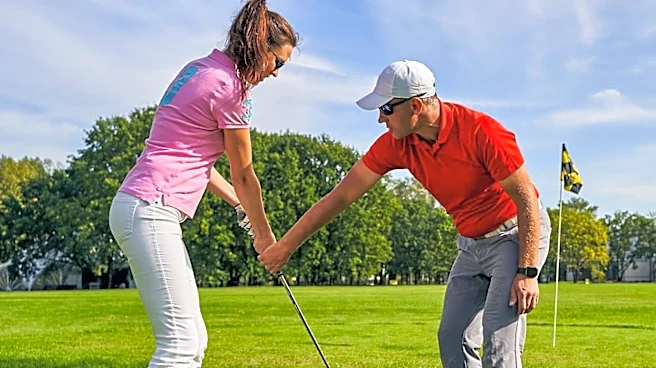
Golfers struggling with the 'chicken wing' can immediately begin to implement the suggested drills and adjustments. The split-hand drill offers a quick way to feel the correct lead arm and elbow position through impact. Practicing hitting the ground after the ball will help build confidence in extending the arms properly. Golfers should also assess their grip and downswing path, as these can be precursors to the 'chicken wing' if the club is too steep. Regular checks of posture, ensuring a proper bow from the hip joint, will also contribute to a more effective swing. Finally, consciously relaxing the elbows, hands, and arms throughout the swing will allow for a natural fold and release of the clubface. Consistent application of these techniques, potentially with the guidance of a golf instructor, will be key to long-term improvement.
Beyond the Headlines
The 'chicken wing' in golf is more than just a physical flaw; it often highlights the intricate relationship between various components of the golf swing. As noted by Kellie Stenzel, it can be a 'necessary compensation' for an earlier issue, underscoring the importance of a holistic approach to swing analysis rather than isolated corrections. This interconnectedness means that addressing one problem might inadvertently resolve others, or conversely, fixing a symptom without understanding its cause could lead to new issues. The emphasis on relaxation and natural movement also touches upon the psychological aspect of golf, where tension can significantly impede performance. Learning to trust the club to strike the ground, for instance, requires overcoming ingrained habits and developing a new sense of control and confidence, which are crucial for mental game improvement in golf.