






What's Happening?
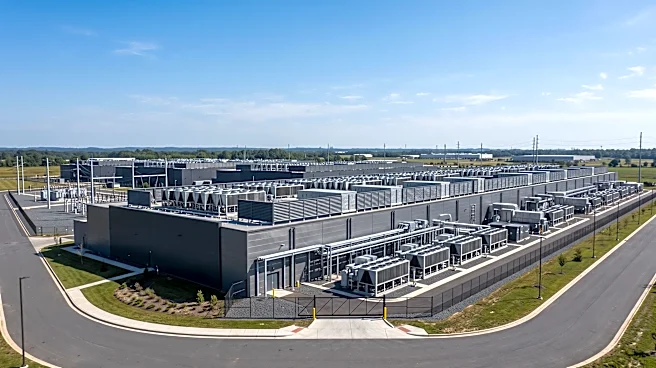
The design and construction industry is experiencing a significant transformation driven by the increasing demand for AI infrastructure and complex facilities. This surge has accelerated the adoption of modular construction approaches, particularly for Mechanical,
Electrical, and Plumbing (MEP) systems, to meet compressed schedules with fewer available resources. MEP modular construction involves assembling portions of these systems in controlled manufacturing environments before installation on-site. Chad Salge, Division Leader and VP at Southland Industries, emphasizes that while manufacturing modular components is beneficial, an integrated lifecycle approach is crucial for designing and assembling modular MEP components effectively. This holistic approach considers all aspects of a facility's design, installation, and operation, requiring early incorporation of team members who understand design, manufacturability, constructability, and service, along with clear delineation of site and modular scopes, aligned contractual arrangements, and owner-driven execution.
Why It's Important?
This integrated approach is vital for U.S. construction and technology sectors as it directly impacts the efficiency, cost-effectiveness, and quality of critical infrastructure projects, especially those supporting AI. The ability to deliver large scopes of work on unprecedented timelines is essential for the rapid deployment of AI technologies, which are increasingly central to economic growth and national competitiveness. Without a holistic view, projects risk delays, cost overruns, and compromised quality, undermining the benefits of modular construction. By ensuring that design, manufacturing, and installation are seamlessly coordinated, this approach helps mitigate risks, optimize resource allocation, and enhance safety for workers. Ultimately, it allows for the creation of more resilient and sustainable facilities, which is crucial for supporting the long-term demands of the AI infrastructure race and other complex market verticals.
What's Next?
The industry is moving towards greater integration in project delivery, with a focus on incorporating diverse expertise from the conceptual phase. This includes architects, engineers, virtual design and construction (VDC) teams, installers, and service personnel collaborating to consider the entire lifecycle of a product and building system. For modular MEP designs, this means evaluating how individual modules will be manufactured, tested, commissioned, installed, and maintained throughout their useful life, with a strong emphasis on safety. While these considerations may add time to the initial planning stages, they are expected to yield significant savings in time, money, and operational issues during later project phases. The continued adoption of this integrated lifecycle approach will likely become a standard practice for complex construction projects, particularly those driven by technological advancements like AI.
Beyond the Headlines
The shift towards an integrated lifecycle approach in MEP modular construction reflects a broader evolution in project management and engineering, emphasizing foresight and collaboration across disciplines. This methodology not only addresses immediate project challenges but also promotes a culture of long-term thinking, where the entire lifespan of a facility is considered from its inception. It highlights the increasing complexity of modern construction, where specialized knowledge in areas like AI infrastructure demands a more sophisticated and coordinated approach. This trend could lead to significant innovations in construction technology, supply chain management, and workforce training, as the industry adapts to deliver high-quality, high-speed projects in an increasingly interconnected and technologically advanced world.