




What's Happening?
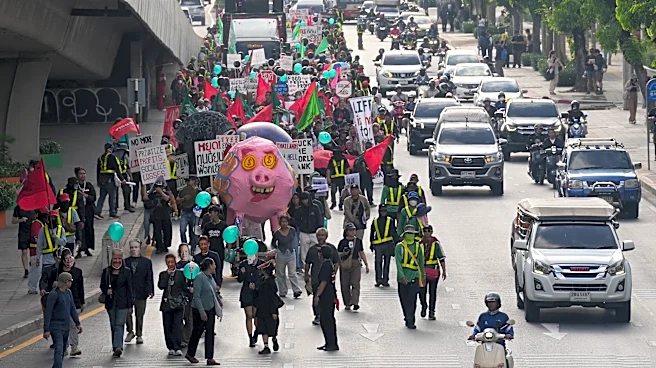
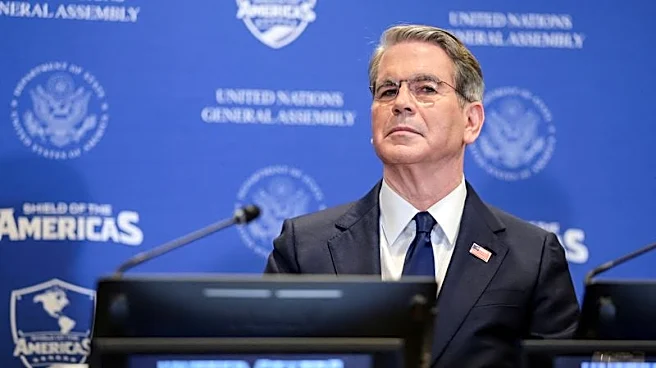
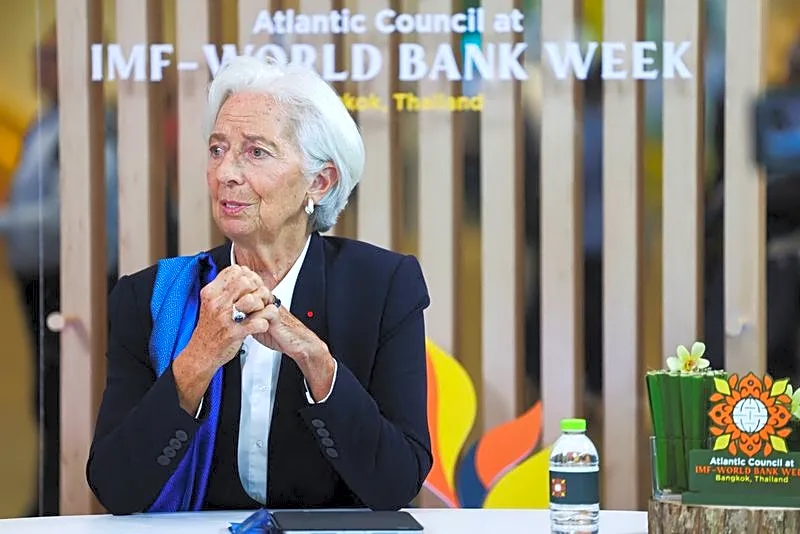
The World Bank Group successfully mobilized $112 billion in private capital during its latest fiscal year, marking a threefold increase from four years prior. This achievement was highlighted by World Bank President Ajay Banga during the annual meetings
with the International Monetary Fund in Bangkok. The institution's broader financing, including its own resources, exceeded $230 billion in the last fiscal year. However, a significant disparity exists in the distribution of this capital, with only approximately $3 billion reaching the world's poorest countries. This uneven result raises questions about the effectiveness of the World Bank's strategy to attract private investors to developing economies, particularly in regions where governments face increasing demands for infrastructure, jobs, and public services. The World Bank's fiscal year concluded on June 30.
Why It's Important?
This development is important because it underscores the World Bank's increasing reliance on private capital to address global development challenges, yet it reveals a critical gap in reaching the most vulnerable nations. While the substantial increase in mobilized private capital demonstrates growing investor confidence in certain developing economies, the stagnation of investment in low-income countries highlights persistent barriers. These barriers include higher commercial risks and fewer established business opportunities, which deter private investors. The World Bank's strategy emphasizes supporting small and medium-sized businesses in these regions, recognizing their potential to drive economic activity where larger companies are absent. However, without a more equitable distribution of private capital, the institution's goal of fostering sustainable development and poverty reduction in the poorest countries may be hampered, potentially exacerbating existing inequalities and hindering progress on critical development priorities like employment and essential services.
What's Next?
The World Bank is expected to continue refining its strategy to attract private investment, with a particular focus on overcoming the challenges in low-income countries. President Banga has indicated that the institution will expand the use of guarantees, equity, and local-currency financing to mitigate risks for investors, such as currency fluctuations and limited access to finance. The World Bank's new strategy for micro, small, and medium-sized enterprises aims to improve their access to finance and markets, which is crucial for job creation and economic growth in these regions. Future efforts will likely involve developing more targeted interventions and risk-sharing mechanisms to incentivize private sector engagement in the most fragile and conflict-affected settings. The effectiveness of these adjustments will be crucial in determining whether the World Bank can achieve a more balanced distribution of private capital and deliver on its development mandate for all member countries.
Beyond the Headlines
Beyond the immediate figures, the uneven distribution of private capital raises deeper questions about the long-term sustainability and inclusivity of global development finance. The World Bank's push for private sector engagement, while necessary, must be carefully balanced with robust safeguards to protect vulnerable populations and ensure accountability. The challenges in attracting investment to the poorest countries could lead to a widening development gap, potentially increasing instability and hindering global efforts to achieve the Sustainable Development Goals. There is a need for innovative financial instruments and policy frameworks that can de-risk investments in challenging environments without compromising social and environmental standards. The ethical implications of relying heavily on private capital in contexts with weak regulatory frameworks and limited consumer protection also warrant close attention, as highlighted by past concerns regarding microfinance practices in fragile settings.