

What's Happening?
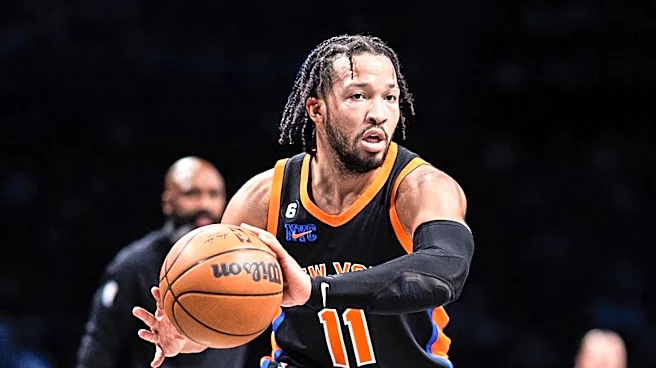
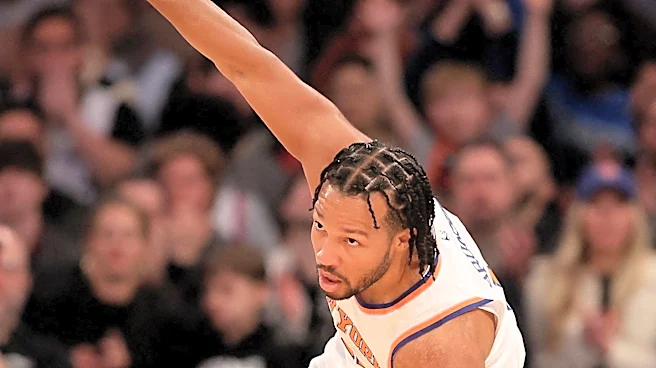
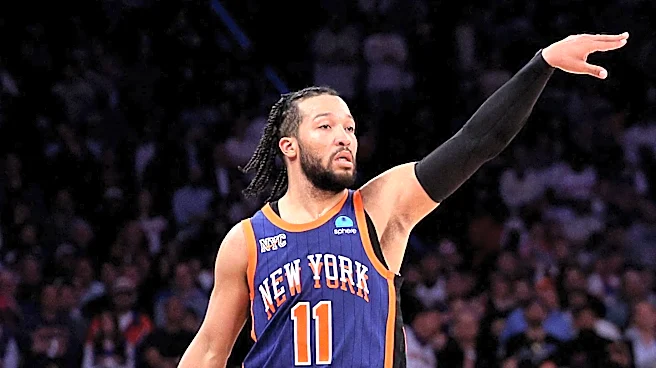
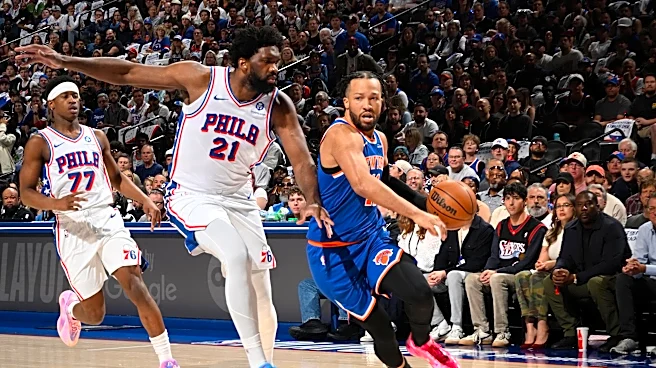
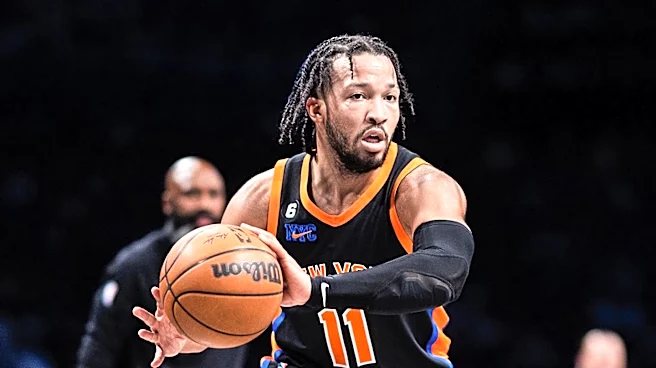
Jalen Brunson, a key player for the New York Knicks, opted for a four-year, $156.5 million contract instead of a potential five-year, $269 million extension. This decision was made to maintain the team's salary cap flexibility and enhance their chances
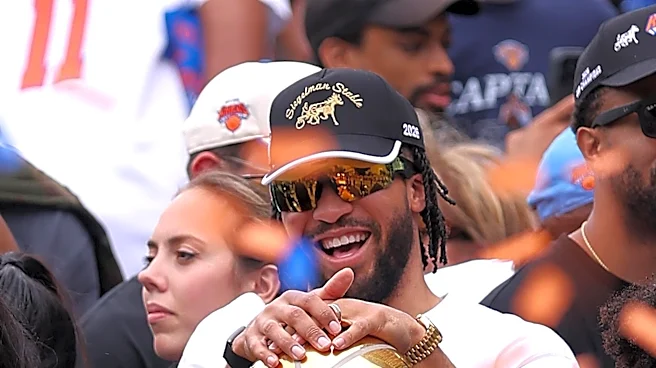
for a championship. Brunson's choice has set a precedent within the team, encouraging other players like Karl-Anthony Towns to consider similar sacrifices. Towns, who is eligible for a four-year, $272 million extension, may not receive a maximum contract offer due to the Knicks' financial strategy. Brunson's leadership and the team's recent NBA Championship victory have underscored the importance of self-sacrifice for team success.
Why It's Important?
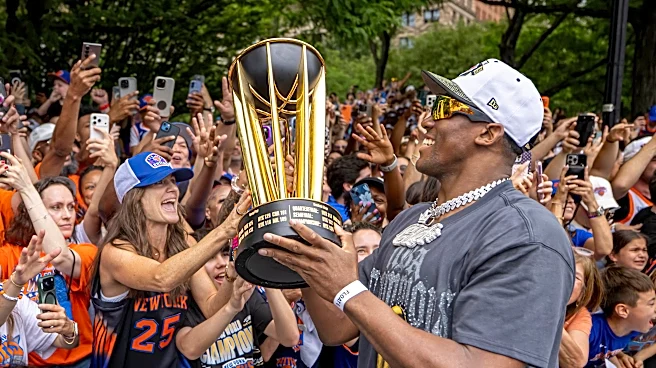
Brunson's decision highlights a shift in the NBA where players prioritize team success over personal financial gain. This approach has proven successful for the Knicks, culminating in their first NBA Championship in 53 years. The strategy could influence other teams and players, potentially leading to a broader trend of financial sacrifices for competitive advantage. For the Knicks, maintaining cap flexibility allows them to build a stronger roster, increasing their chances of sustained success. This could also impact contract negotiations across the league, as players weigh the benefits of team success against personal earnings.
What's Next?
Karl-Anthony Towns faces a decision on whether to accept a potentially lower offer to remain with the Knicks. The team's management is expected to negotiate with Towns, aiming to retain him while staying under the salary cap. The outcome of these negotiations could set a precedent for future contract discussions within the team and possibly influence other NBA teams' strategies. Fans and analysts will be watching closely to see if Towns follows Brunson's lead, which could further solidify the Knicks' competitive position.