


What's Happening?
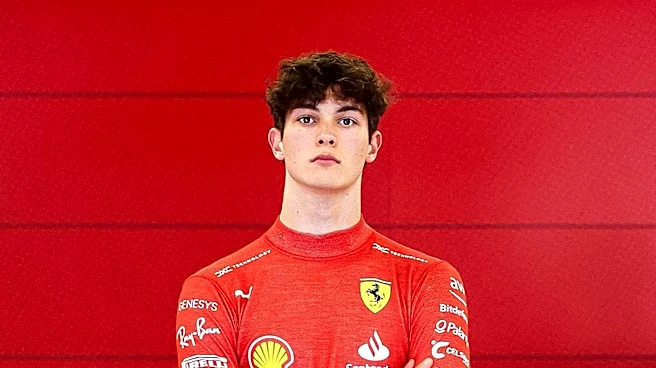
Oliver Bearman, a British driver for the Haas Formula 1 team, has voiced concerns regarding the design of the new Spanish Grand Prix track in Madrid. Bearman believes there is a significant 'oversight' in the circuit's layout, particularly concerning
the braking zone for Turn 5. This turn, which he identifies as a key overtaking opportunity, features curved braking, which he argues severely limits the ability for drivers to take different lines and attempt overtakes. The new 22-turn, 3.3-mile semi-permanent street track, located around the IFEMA entertainment complex, is hosting the Spanish Grand Prix for the first time. Bearman suggests that the track's design, characterized by a high number of 90-degree 'point and squirt' corners, will make overtaking a major challenge, especially in the latter half of the lap. He anticipates that qualifying performance will be paramount due to these limitations, similar to races in Budapest, Monaco, or Zandvoort.
Why It's Important?
The concerns raised by Oliver Bearman about the Madrid F1 track's design highlight a critical aspect of Formula 1 racing: the balance between challenging circuits and opportunities for competitive overtaking. If the track indeed limits overtaking as significantly as Bearman suggests, it could lead to less dynamic and potentially processional races, where starting position dictates the outcome more than on-track battles. This impacts not only the excitement for fans but also the strategic considerations for teams and drivers. For teams like Haas, which may not always have the outright pace to dominate qualifying, a track that hinders overtaking further reduces their chances of moving up the field during the race. The design choices of new circuits are crucial for the sport's appeal, and an 'oversight' in a major Grand Prix venue could lead to discussions about future track design philosophies and the need for circuits that promote thrilling wheel-to-wheel action.
What's Next?
Following Oliver Bearman's comments, the focus for the Spanish Grand Prix will likely shift to how drivers and teams adapt to the perceived overtaking limitations. Qualifying performance will be under intense scrutiny, as it is expected to play a more decisive role in the race outcome. Teams will be strategizing to maximize their qualifying pace and track position from the outset. Post-race, there will likely be further discussions among drivers, teams, and F1 officials regarding the track's design and its impact on racing quality. Depending on the race's outcome and the prevalence of overtaking, or lack thereof, the feedback from this inaugural event could influence future modifications to the Madrid circuit or inform the design principles for other new Formula 1 venues. The F1 community will be observing closely to see if Bearman's predictions about the lack of overtaking opportunities materialize during the Grand Prix.
Beyond the Headlines
The 'oversight' identified by Oliver Bearman in the Madrid F1 track design touches upon a broader philosophical debate within Formula 1 regarding the nature of modern circuits. There's a constant tension between creating technically demanding tracks that test driver skill and designing layouts that facilitate exciting racing for spectators. Street circuits, while often bringing the sport to new urban audiences and offering unique backdrops, frequently face criticism for their inherent limitations in promoting overtaking due to tight corners and limited run-off areas. Bearman's remarks underscore the challenge of balancing safety, technical complexity, and race spectacle. This situation could reignite discussions about the ideal characteristics of a Formula 1 circuit and whether the pursuit of new, iconic locations sometimes compromises the fundamental elements that make racing thrilling. It also highlights the importance of driver feedback in the design and evolution of racing venues.


