






What's Happening?
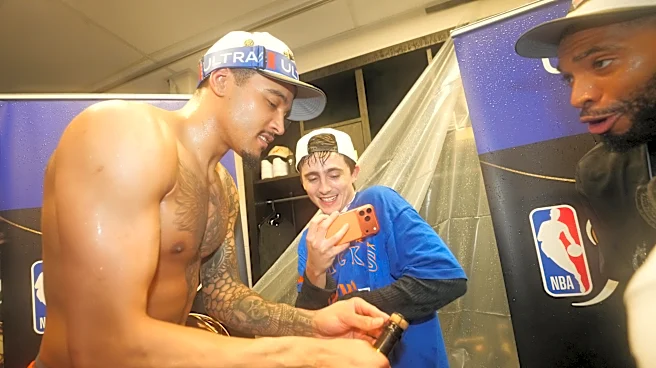
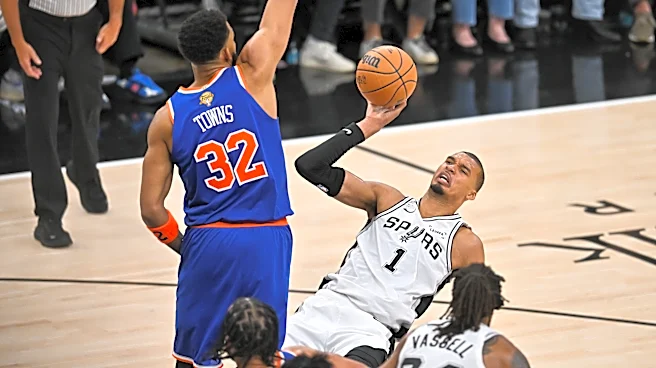
Following the NBA Finals, where the New York Knicks secured their first championship in over 50 years, sports media has focused on Victor Wembanyama's role in the series. Despite his talent, Wembanyama faced criticism for his performance, particularly
regarding his physicality and maturity under pressure. Some media outlets have framed him as the NBA's next villain, highlighting incidents that nearly led to his suspension. This narrative shift from a promising young talent to a potential antagonist has sparked debate about the role of media in shaping public perception of athletes.
Why It's Important?
The portrayal of Wembanyama as a villain reflects broader trends in sports media, where narratives often simplify complex personalities into hero-villain dynamics. This approach can influence public perception and impact an athlete's career trajectory. The media's focus on creating compelling stories can overshadow genuine analysis of a player's development and performance. For Wembanyama, this narrative could affect his public image and how he is perceived by fans and sponsors. It also raises questions about the responsibility of sports media in shaping athlete narratives and the potential consequences for young players.
What's Next?
As Wembanyama continues his career, the narrative surrounding him may evolve, especially if he returns to the NBA Finals. Future performances could either reinforce or challenge the current villain narrative. The media's role in this process will be crucial, as they have the power to shift public perception through their coverage. Wembanyama's response to criticism and his development as a player will also play a significant role in shaping his legacy. The ongoing discussion about his role in the NBA highlights the need for more nuanced and balanced media coverage of athletes.
Beyond the Headlines
The media's portrayal of Wembanyama touches on broader issues of how athletes are marketed and perceived. The construction of a villain narrative can have lasting effects on an athlete's mental health and public image. It also reflects societal tendencies to seek clear-cut narratives in sports, often at the expense of understanding the complexities of individual players. This case underscores the importance of responsible journalism and the need for media to consider the impact of their narratives on athletes' lives and careers.