





What's Happening?
Driscoll's, a dominant force in the U.S. berry market, is facing increasing pressure from activists and legal challenges over allegations of harmful environmental and labor practices. The company, which controls roughly a third of the U.S. berry market, operates
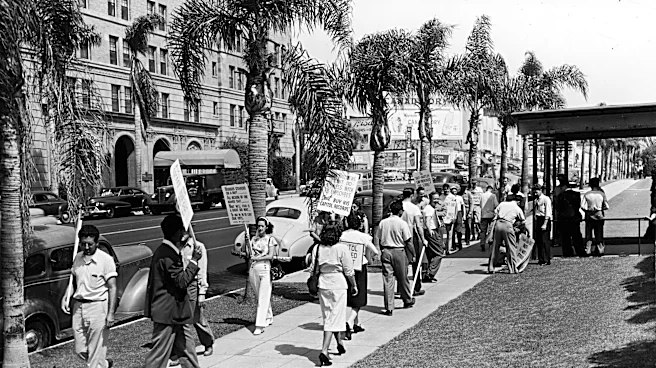
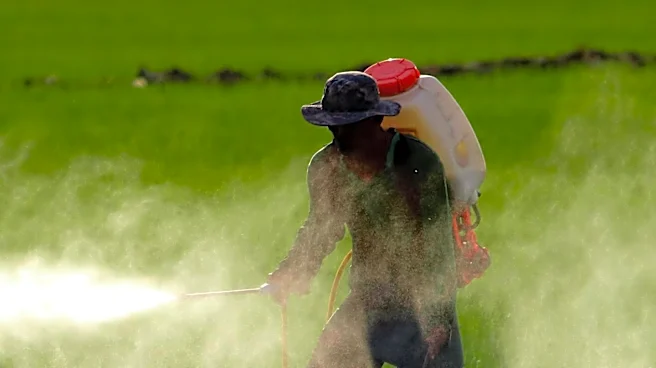
under a contract farming model where it provides plants and strict growing instructions to farmers, who then sell the harvested berries back to Driscoll's. This model has been criticized for offloading operational, environmental, and labor risks onto contracted growers, effectively shielding Driscoll's from direct liability. Allegations include wage theft, poor working and housing conditions, child labor violations at contracted farms, and the extensive use of pesticides near schools and neighborhoods. Environmental concerns also highlight the massive water consumption by Driscoll's contracted farms, leading to groundwater depletion in some regions. Recent legal actions include a class-action lawsuit in California alleging the company failed to disclose detectable levels of per- and polyfluoroalkyl substances (PFAS) in its strawberries, and another lawsuit in D.C. Superior Court challenging Driscoll's sustainability messaging as misleading due to significant plastic use and low recycling rates.
Why It's Important?
The allegations against Driscoll's highlight significant issues within the agricultural supply chain, particularly concerning corporate responsibility, environmental stewardship, and labor rights. The company's business model, which separates it from direct farming operations, raises questions about accountability for practices occurring at contracted farms. If successful, the consumer protection lawsuits could set a precedent for holding large food corporations responsible for product content and environmental claims, potentially leading to increased transparency and stricter regulations across the industry. The whistleblower lawsuit by former employee David Harada, alleging that Driscoll's was aware of and sought to conceal pesticide applications exceeding legal limits, could severely damage consumer trust and prompt regulatory investigations. The calls for a boycott reflect growing consumer awareness and demand for ethically and sustainably produced food, which could impact Driscoll's market share and influence other food companies to re-evaluate their supply chain practices. This situation also underscores the challenges faced by farmworkers, particularly in Latin America, who often operate under precarious conditions with limited recourse.
What's Next?
The ongoing class-action lawsuit in California regarding PFAS in strawberries and the lawsuit in D.C. challenging Driscoll's sustainability claims will proceed, potentially leading to significant legal battles and financial penalties for the company. The whistleblower lawsuit filed by David Harada, if proven, could trigger further investigations by regulatory bodies into Driscoll's food safety practices and pesticide use. Activist organizations and individuals are continuing to call for boycotts of Driscoll's products, which could impact sales and brand reputation. There is also potential for increased regulatory action, with suggestions for amending the U.S.-Mexico-Canada Agreement (USMCA) to include agricultural goods in its labor dispute mechanisms, allowing for international union organizing. Some propose a tax on Driscoll's and supermarkets selling its products to incentivize better behavior. Consumers may increasingly shift towards supporting local farmers' markets and smaller produce stands as a response to concerns about large-scale corporate farming practices.
Beyond the Headlines
The Driscoll's controversy delves into the ethical dimensions of global food production and the power dynamics between large corporations and individual farmers. The company's business model exemplifies a broader trend in many industries where liability is strategically diffused across a network of contractors, making it difficult to assign direct responsibility for negative impacts. This raises fundamental questions about corporate ethics, the true cost of cheap food, and the effectiveness of current legal frameworks in protecting workers, consumers, and the environment. The focus on 'greenwashing' in consumer protection lawsuits highlights a growing demand for genuine sustainability rather than mere marketing claims, pushing companies to adopt more transparent and verifiable practices. Furthermore, the situation underscores the vulnerability of agricultural workers, often migrant laborers, who are at the forefront of these exploitative practices, and the need for stronger international labor protections and enforcement mechanisms to ensure fair treatment and safe working conditions.