






What's Happening?
Dominion Energy is disputing a state regulator-required calculation that projects monthly residential electric bills in Virginia could rise from a current $180 to $458 by 2046. This estimate represents a more than 150% increase. The company's own preferred
energy plan, outlined in its Integrated Resource Plan Update, anticipates a more modest increase, projecting monthly bills to reach approximately $285 by 2046, with a $258 bill projected for 2036. Dominion Energy argues that the state's calculation gives insufficient weight to expected sales from growing demand, thereby overstating future bills. Both sets of figures are projections and not approved rate increases, with future electricity rates still requiring regulatory approval. These projections assume a household electricity usage of 1,000 kilowatt-hours per month.
Why It's Important?
The discrepancy in projections highlights a significant debate over the future cost of electricity for Virginia residents and the methodologies used to forecast these costs. If the higher, state-mandated projection of $458 per month materializes, it would represent an annual cost of roughly $5,496, a substantial burden for households compared to the current $2,160 annually. This could lead to increased financial strain on consumers and potentially impact the state's economy as disposable income is diverted to utility payments. The dispute also underscores the tension between utility companies' business models, which often rely on increased demand and infrastructure investments, and regulatory bodies tasked with protecting consumer interests. The outcome of this dispute and the eventual approved rates will significantly influence household budgets and energy policy in Virginia.
What's Next?
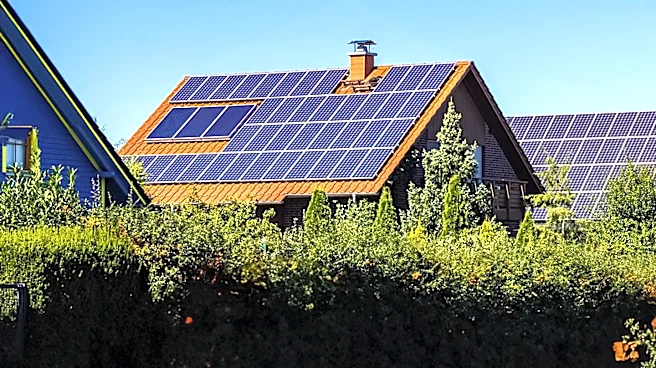
The projections from both Dominion Energy and the state regulator are not final approved rates; they are forecasts that will inform future regulatory decisions. Dominion Energy's Integrated Resource Plan Update will continue to be a key document in these discussions, outlining the utility's strategy for meeting Virginia's electricity demand through 2046. Regulatory bodies will need to evaluate the arguments presented by Dominion Energy regarding sales from growing demand and determine the most accurate and fair projections for future electricity costs. Homeowners in Virginia may consider exploring options like solar energy and battery storage to manage potential increases in energy costs, as suggested by resources like EasyHome. The ongoing dialogue between the utility and state regulators will ultimately shape the electricity landscape for consumers in the coming decades.
Beyond the Headlines
This situation in Virginia reflects a broader national challenge concerning rising utility costs, infrastructure investments, and the transition to cleaner energy sources. The debate over how to accurately project future electricity bills touches upon complex economic modeling, regulatory oversight, and the balance between utility profitability and consumer affordability. The increasing demand for electricity, partly driven by factors like data centers, adds another layer of complexity to these forecasts. The long-term implications extend beyond mere financial figures, potentially influencing population migration, business investment decisions within the state, and the overall quality of life for residents. The resolution of this dispute could set precedents for how other states approach utility rate setting and long-term energy planning.