







What's Happening?
A new book titled 'With the Beatles: Mal Evans's Illustrated Journey' by Beatles scholar Kenneth Womack, published by Harper Pop on December 1, is set to reveal hundreds of previously unseen photos of The Beatles. These images come from the archives of Mal Evans,
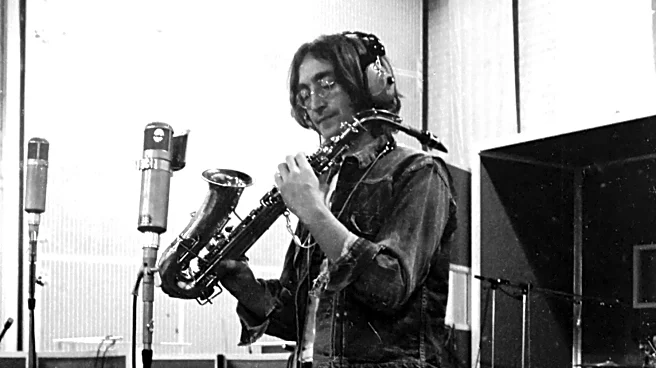
the band's devoted roadie, and include his diaries, manuscripts, and artifacts. Among the highlights are exclusive, previously unpublished photos of John Lennon playing the saxophone in the studio in September 1968, during the recording sessions for the White Album at Abbey Road. These particular photos capture Lennon during a marathon overdubbing session for 'Helter Skelter' on the night of September 10 and 11, 1968, in EMI Studio 2. The images show Lennon experimenting with an alto sax, an instrument he reportedly did not know how to play, alongside Evans who played a trumpet he had recently acquired. Their impromptu brass contributions can be heard in the final mix of 'Helter Skelter,' offering a rare glimpse into the band's creative and playful process.
Why It's Important?
The release of these previously unseen photos and archival materials offers a significant new perspective on one of the most influential bands in music history, The Beatles. For fans and music historians, these images provide an intimate and unfiltered look into the band's creative process, particularly during the recording of the iconic White Album. Mal Evans, as an insider and trusted member of their inner circle, captured moments that were otherwise inaccessible to the public. This collection helps to humanize the legendary figures, showcasing their experimental nature and camaraderie during a pivotal period in their career. The inclusion of diary entries and manuscripts further enriches the historical record, potentially shedding new light on the dynamics within the band and the creation of their music. This release underscores the enduring cultural impact of The Beatles and the continuous discovery of new facets of their legacy, reinforcing their status as a subject of ongoing academic and popular interest.
What's Next?
The book 'With the Beatles: Mal Evans's Illustrated Journey' is scheduled for publication by Harper Pop on December 1. Following its release, it is anticipated to generate considerable interest among Beatles fans, music historians, and collectors worldwide. The publication will likely lead to renewed discussions and analyses of The Beatles' White Album era, with scholars and enthusiasts poring over the new visual and textual evidence. There may be further exhibitions or documentaries inspired by Evans's archives, expanding on the insights provided in the book. The release could also spark a re-evaluation of Mal Evans's role within The Beatles' story, highlighting his importance not just as a roadie but as a chronicler of their private moments. The book's content may also influence future interpretations of specific songs or recording sessions, offering a more nuanced understanding of the band's creative decisions.
Beyond the Headlines
The unveiling of Mal Evans's archives transcends a mere collection of photographs; it offers a profound insight into the often-unseen human element behind musical genius. Evans's unique position as a trusted confidant allowed him to capture the raw, unscripted moments of The Beatles' creative journey, revealing their vulnerability, humor, and relentless experimentation. This collection highlights the critical role of 'insiders'—those behind-the-scenes figures who, through their proximity and dedication, become invaluable custodians of history. The story of Evans's archives, lost and then rediscovered, also touches upon themes of legacy and the preservation of cultural heritage. It underscores how personal artifacts, often overlooked in their time, can later become crucial pieces of a larger historical puzzle, offering future generations an authentic connection to past icons and their creative processes. The images of John Lennon, an untrained musician, spontaneously picking up a saxophone for 'Helter Skelter' exemplify the band's boundary-pushing ethos and their willingness to embrace unconventional methods in pursuit of artistic expression.