



What's Happening?
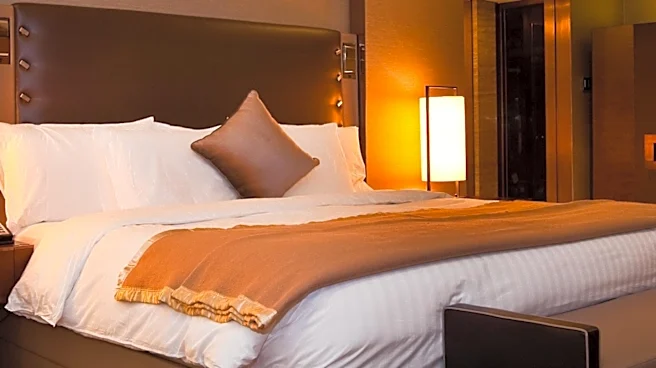
Luxury hotels in New York City are embracing 'sleep tourism,' a growing trend in wellness travel that offers specialized programs and environments designed to improve sleep quality. This movement, which gained recognition in the early 2020s, focuses on providing
high-end experiences to help guests recover from stress and fatigue. For instance, the five-star Equinox Hotel New York offers 'sleep labs' and treatments like the Sleep Wave Table, paired with NutriSLEEP IV drips containing relaxation-inducing nutrients such as magnesium. Other establishments, like The Benjamin Royal Sonesta, feature extensive 'pillow menus' tailored to different sleep styles, and the Park Hyatt New York provides 'Sleep Suites by Bryte' with AI-powered beds that adjust to a sleeper's movements. These initiatives aim to transform the travel experience by prioritizing restorative sleep, even in a city known for its constant activity.
Why It's Important?
The emergence of sleep tourism in a major U.S. hub like New York City signifies a notable shift in the luxury hospitality sector, recognizing sleep as a critical component of overall health and well-being. This trend caters to a demographic increasingly aware of sleep's impact on health, offering bespoke solutions that go beyond traditional spa services. For the U.S. travel industry, it opens new revenue streams and market segments, attracting high-net-worth individuals seeking data-driven longevity programs and personalized wellness. Hotels that invest in these specialized offerings can differentiate themselves in a competitive market, potentially influencing design and service standards across the industry. This focus on sleep also highlights a broader societal recognition of chronic sleep issues and the demand for innovative, high-end solutions.
What's Next?
The success of these pioneering sleep-focused programs in New York City is likely to encourage other luxury hotels and wellness resorts across the U.S. to adopt similar offerings. We can anticipate further innovation in sleep technology and therapies, with potential collaborations between hospitality brands and sleep science experts. The trend may also lead to the development of standardized certifications or ratings for 'sleep-friendly' accommodations, guiding consumers in their choices. As awareness of sleep health grows, demand for these services could expand beyond the ultra-luxury segment, prompting mid-range hotels to integrate more basic sleep-enhancing amenities. Additionally, the integration of personalized data tracking and AI-driven adjustments in sleep environments is expected to become more sophisticated, offering increasingly tailored experiences.
Beyond the Headlines
Beyond the immediate commercial implications, the rise of sleep tourism reflects a deeper cultural shift towards prioritizing mental and physical restoration in an increasingly demanding world. It underscores a growing recognition that luxury is not just about indulgence but also about optimizing personal performance and well-being. This trend could influence urban planning and design, with a greater emphasis on creating environments conducive to rest and recovery, even in bustling city centers. Ethically, it raises questions about accessibility, as these high-cost services remain exclusive, potentially widening the gap in health and wellness access. Furthermore, the reliance on technology and data in these 'sleep labs' could spark discussions about privacy and the balance between technological enhancement and natural restorative practices.