








What's Happening?
James Walden, co-legislative chair for the Arkansas chapter of the American Planning Association, has highlighted the challenges posed by upfront costs and development rules to growth plans in Northwest Arkansas. Developers, such as Yume Rudzinski, face
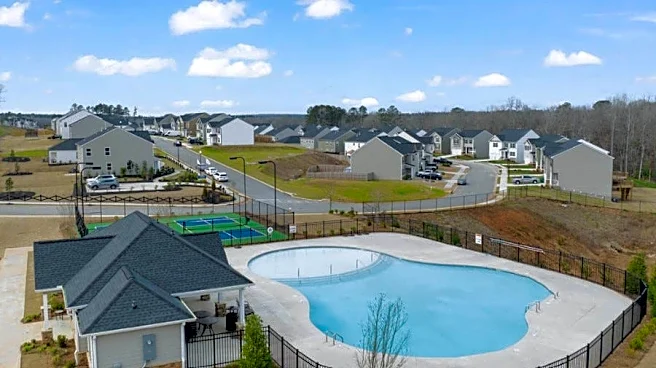
significant financial burdens and bureaucratic hurdles, often waiting extended periods for permits and approvals. Rudzinski's experience, waiting three years for a grading permit for a 51-acre site in Rogers, illustrates the complexities. Developers must invest heavily in engineers, architects, and consultants before project approval, which can deter investors. Walden notes that development at city edges can lead to expensive infrastructure problems for municipalities when residents later seek annexation or urban services, placing a considerable financial burden on existing taxpayers.
Why It's Important?
The issues raised by James Walden are critical for the sustainable development of Northwest Arkansas, a region projected to reach a population of 1 million by 2050. The current challenges, including high upfront costs and restrictive development codes, can stifle necessary housing and infrastructure projects. This not only impacts developers but also affects housing affordability and the region's ability to create walkable, mixed-use communities that residents desire. The lack of coordination in development standards and infrastructure planning between cities and counties can lead to inefficient resource allocation and increased long-term costs for taxpayers. Addressing these issues is essential for ensuring that growth benefits all residents and does not create unforeseen financial liabilities for municipalities.
What's Next?
Discussions among regional leaders, planners, and developers, like those at the recent forum in Springdale, are aimed at identifying solutions to these development challenges. The Urban Land Institute Northwest Arkansas plans to follow up with participants to gather more information and develop a technical report. This report, to be presented at the upcoming Place Summit, will examine barriers to creating urban centers and corridors. The goal is to foster better coordination between cities and counties on development standards, utilities, and road maintenance, and to explore legislative or practical procedures to facilitate collaboration. Efforts will also focus on making approval processes more predictable and reducing unnecessary uncertainty for developers, ultimately aiming to improve housing affordability and create desirable communities.
Beyond the Headlines
The complexities of urban development in Northwest Arkansas, as articulated by James Walden, reflect a common dilemma faced by rapidly growing regions across the U.S. The tension between accommodating growth, preserving community character, and ensuring financial sustainability for municipalities is a delicate balance. This situation highlights the need for innovative planning approaches that integrate long-term vision with practical implementation strategies. It also underscores the importance of regional cooperation, as individual city-level decisions can have ripple effects across an entire metropolitan area. The debate over development rules and upfront costs is not just about economics; it's about shaping the future quality of life, environmental impact, and social equity within these evolving communities.