



What's Happening?
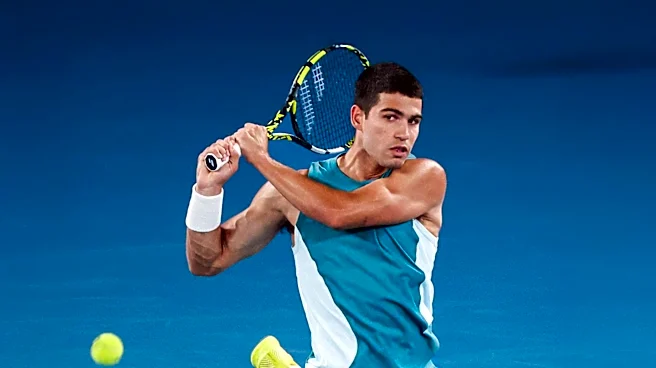
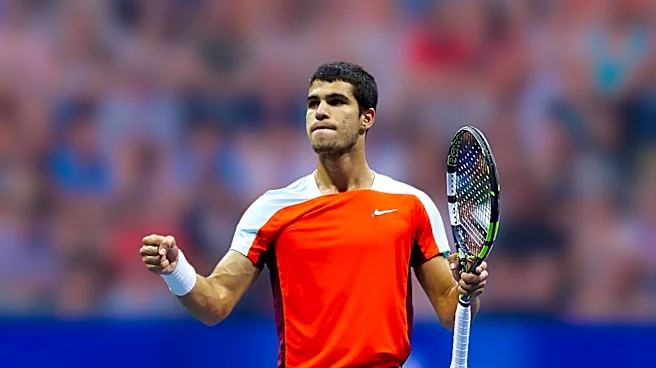
Carlos Alcaraz, the youngest men's player to reach World No. 1 in tennis, has publicly declared Novak Djokovic as the greatest tennis player of all time. This statement comes despite Alcaraz having idolized Rafael Nadal during his childhood. The debate
over the 'Greatest Of All Time' (GOAT) in tennis typically involves Roger Federer, Rafael Nadal, and Novak Djokovic. Alcaraz's decision to name Djokovic is based on the Serb's statistical achievements, including holding the most Grand Slam titles among male players with 24. Federer retired with 20 Grand Slams, and Nadal retired with 22. Alcaraz made these comments ahead of the Laver Cup, reiterating a stance he first expressed two years prior. Nadal himself has also acknowledged Djokovic's statistical superiority, citing his consistent high level of play and fewer injuries.
Why It's Important?
This declaration from a prominent young player like Carlos Alcaraz carries significant weight within the tennis community. Alcaraz represents the next generation of tennis stars, and his endorsement of Djokovic as the GOAT solidifies the narrative around Djokovic's unparalleled statistical dominance. This perspective could influence public opinion and future discussions about tennis history, potentially shifting the focus from subjective assessments of style or impact to objective measures of titles and records. For Djokovic, this recognition from a peer and rival further cements his legacy. For the sport, it highlights the ongoing evolution of the GOAT debate, moving towards a more data-driven evaluation, especially as the 'Big Three' era transitions. It also underscores the respect and acknowledgment among top athletes for each other's achievements, even across generations and rivalries.
What's Next?
The ongoing discussion about the greatest tennis player of all time is likely to continue, with Alcaraz's comments adding a new dimension to the debate. As Novak Djokovic remains active in professional tennis, there is a possibility he could further extend his record of Grand Slam titles, which would only strengthen Alcaraz's assessment. Future generations of players and analysts will continue to weigh statistical achievements against other factors like influence, artistry, and sportsmanship. The Laver Cup, where Alcaraz is participating, will provide another platform for top players to compete and potentially offer further insights into their views on the sport's legends. The continued success of young stars like Alcaraz will also shape the future landscape of tennis, influencing how past eras are viewed in comparison to current and future achievements.
Beyond the Headlines
Alcaraz's statement transcends a simple ranking; it reflects a broader shift in how athletic greatness is perceived and measured. While emotional connections to players like Nadal and Federer remain strong, the emphasis on quantifiable achievements, such as Grand Slam titles, is becoming increasingly central to the GOAT discussion. This trend is not unique to tennis but is observed across various sports, where data and statistics play a crucial role in defining legacies. The acknowledgment from a player who grew up idolizing one legend but recognizes another's statistical supremacy speaks to a maturing perspective within the sport, where objective data can override personal allegiances. This also highlights the pressure on current and future players to not only achieve success but to do so with a level of consistency and longevity that can stand up to historical comparisons.