







What's Happening?
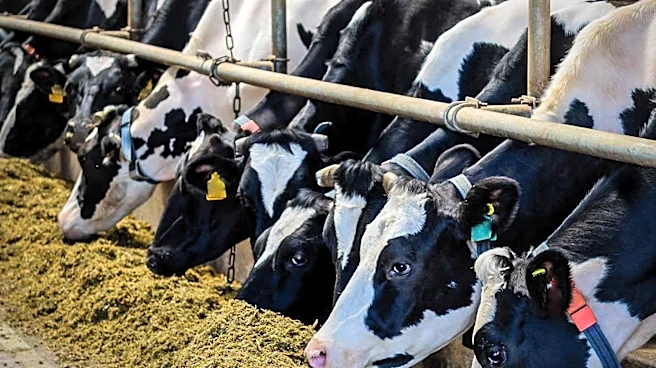
Dairy farms utilizing automated milking systems are increasingly questioning the necessity and optimal levels of concentrate feeding in milking stalls. Historically, concentrate was used to encourage cows to visit the stalls frequently and to distract
them during milking, with the belief that higher amounts led to more frequent milkings, increased production, and precise nutrient delivery. However, recent research from Spain, Canada, and the U.S. indicates no significant differences in production or animal behavior with higher concentrate feeding levels. Furthermore, increased concentrate allocation can lead to greater variability between expected and actual consumption, potentially impacting cow health and production, especially for fresh cows. Farms are now exploring strategies to minimize or eliminate in-stall concentrate to reduce purchased feed costs, remove less-digestible feedstuffs, and simplify the feeding system. This re-evaluation is driven by economic pressures and a desire for more efficient resource management.
Why It's Important?
The shift in concentrate feeding strategies in automated milking systems has significant implications for the U.S. dairy industry's profitability and sustainability. By reducing or eliminating in-stall concentrate, farms can lower purchased feed costs, which represent a substantial portion of operational expenses. This is particularly relevant given current market dynamics and the need to maintain profitability in livestock production. The research challenging previous assumptions about concentrate benefits encourages dairy producers to adopt more data-driven and tailored nutrition plans. This could lead to more efficient use of on-farm grain mixes and precision feeding of nutrient-dense feedstuffs like high-oleic soybeans. Improved feed management can also enhance cow health and welfare by reducing variability in nutrient intake and potentially decreasing the incidence of health issues. The adoption of such strategies could improve the overall economic viability of dairy farms and contribute to more sustainable agricultural practices.
What's Next?
Dairy farms are advised to conduct partial budgets and consult with nutrition experts and management teams to determine the most effective feeding strategy for their specific systems. Key factors to consider include cow flow, existing cow training, lactation curves, and available on-farm feeds. Farms with fully guided-flow barn designs have shown greater success in eliminating in-stall feed. Gradual reduction of concentrate, coupled with adjustments to the partially mixed ration (PMR) at the bunk, is recommended to avoid cow discontent and nutritional deficiencies. The industry may see an increased focus on optimizing on-farm feed resources and exploring alternative feedstuffs to reduce reliance on purchased concentrates. Further research is needed to definitively determine the long-term impacts of different feeding philosophies on production and cow health. The Nebraska Extension Beef Team's Feed Cost Cow-Q-Lator is a tool that can assist producers in evaluating cost differences of various feedstuffs.
Beyond the Headlines
The re-evaluation of concentrate feeding in automated milking systems highlights a broader trend in agriculture towards optimizing resource utilization and enhancing efficiency through technological integration and scientific research. This move away from traditional practices, based on new data, underscores the importance of continuous learning and adaptation in farming. It also brings to light the ethical considerations of animal welfare, as feeding strategies are now being scrutinized for their impact on cow health and behavior, not just production metrics. The potential for increased use of on-farm grain mixes and specialized feedstuffs could also stimulate local agricultural economies and reduce the carbon footprint associated with transporting feed. This evolution in dairy farming practices reflects a commitment to both economic resilience and responsible animal husbandry, setting a precedent for other livestock sectors.