



What's Happening?
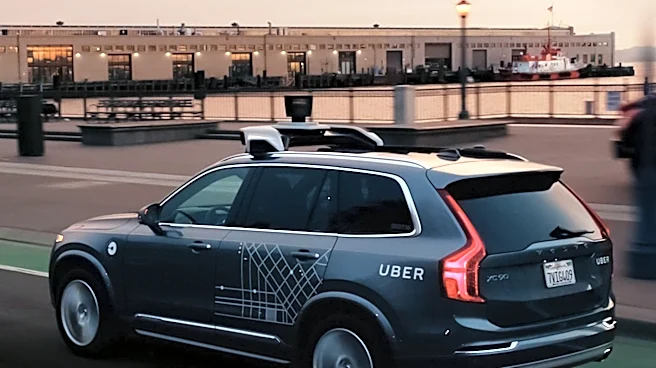
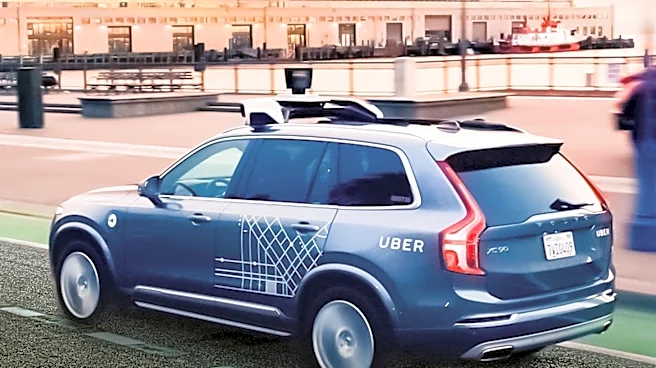
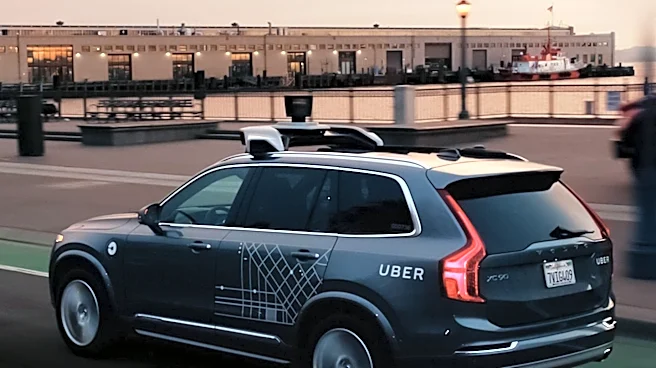
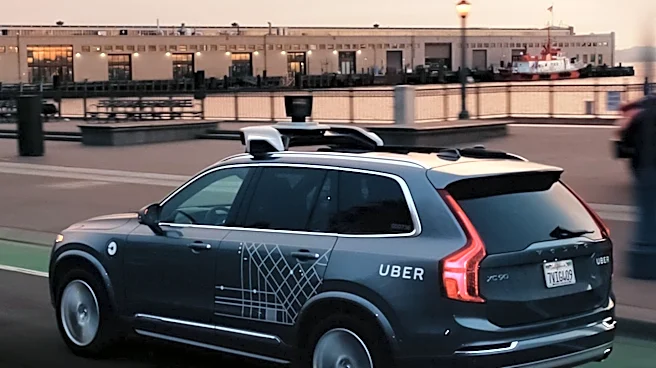
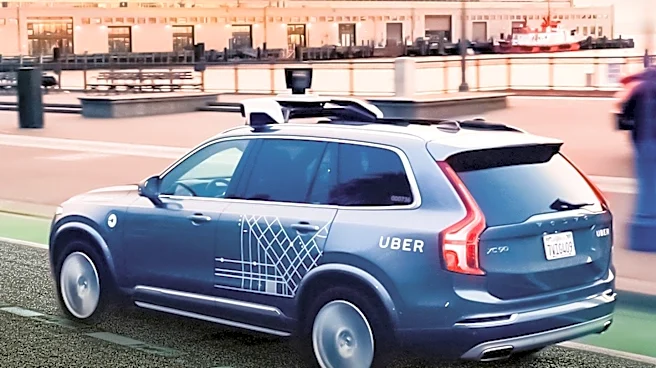
Uber, in partnership with Lucid and Nuro, has commenced driverless robotaxi testing on public roads in the Bay Area, specifically in Palo Alto, Mountain View, Los Altos, and Sunnyvale. This move signifies Uber's re-entry into the self-driving car business,
nearly a decade after its initial withdrawal due to a fatal crash and legal challenges. The Lucid Gravity electric SUVs, equipped with Nuro's autonomous driving system and a combination of high-resolution cameras, lidar, and radar sensors, are being used for these tests. Employees are expected to be the first passengers in the coming months, with a public launch anticipated in the first quarter of 2027. Riders will eventually be able to summon these robotaxis via the Uber app. This initiative follows Uber's significant investments in Lucid and Nuro, totaling $500 million in Lucid alone, and plans to expand the fleet to at least 35,000 vehicles, with Houston slated as the next U.S. market in 2027.
Why It's Important?
Uber's return to the autonomous vehicle market through strategic partnerships with Lucid and Nuro is a significant development for the ride-hailing industry and the broader transportation sector. This move intensifies competition in the burgeoning robotaxi space, where companies like Waymo are already established. The success or failure of Uber's renewed efforts could influence investment trends in autonomous technology and shape consumer adoption of driverless services. For Lucid and Nuro, the partnership provides a substantial platform for deploying their electric vehicles and self-driving technology, potentially accelerating their market penetration. The expansion of robotaxi services could also impact urban planning, traffic management, and employment in the traditional taxi and ride-share sectors. Furthermore, the emphasis on electric vehicles aligns with broader environmental goals and could contribute to the decarbonization of transportation.
What's Next?
Following the initial testing phase with employees, Uber plans a public launch of its driverless robotaxi service in the Bay Area during the first quarter of 2027. The service is then expected to expand to Houston in 2027, with further international expansion planned. Uber is also exploring other partnerships, including a deal with Rivian for up to 50,000 robotaxis and offering rides in Amazon-owned Zoox's robotaxis in Las Vegas. However, competition is intensifying, with Waymo planning to end its Uber app arrangement in Austin and Atlanta by January 2028 to launch its own ride-hailing app. These developments suggest a dynamic and competitive landscape for autonomous ride-hailing services, with companies vying for market share and technological dominance. Regulatory bodies will also continue to play a crucial role in overseeing the safety and deployment of these technologies.
Beyond the Headlines
Uber's re-entry into the autonomous vehicle sector raises important ethical and legal considerations, particularly given its past incidents, including a fatal crash involving one of its self-driving vehicles. The deployment of driverless robotaxis necessitates robust safety protocols, clear liability frameworks in case of accidents, and public trust. The increasing presence of autonomous vehicles on public roads will also prompt discussions about data privacy, as these vehicles collect vast amounts of information about their surroundings and passengers. Furthermore, the long-term societal impact on employment, particularly for professional drivers, will be a critical issue. The competition among major tech and automotive players to dominate this space could also lead to rapid technological advancements, but also potential regulatory challenges as different jurisdictions grapple with varying approaches to autonomous vehicle governance.