



What's Happening?
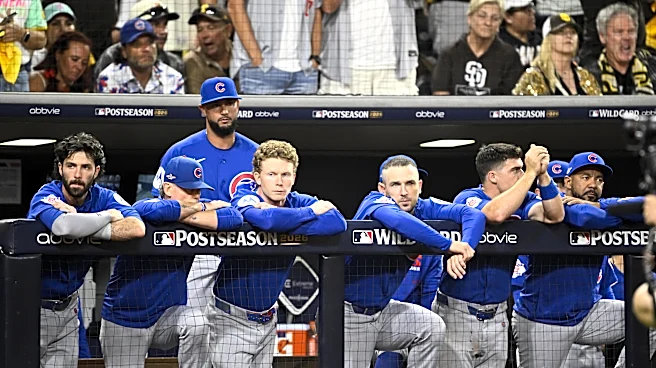
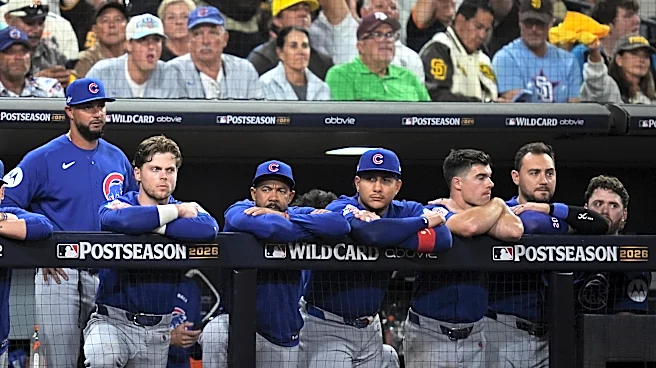
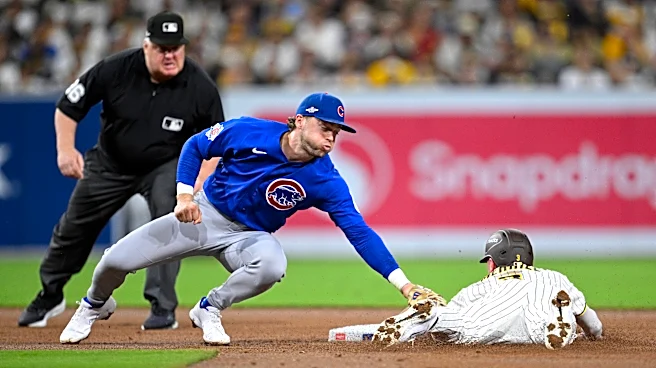
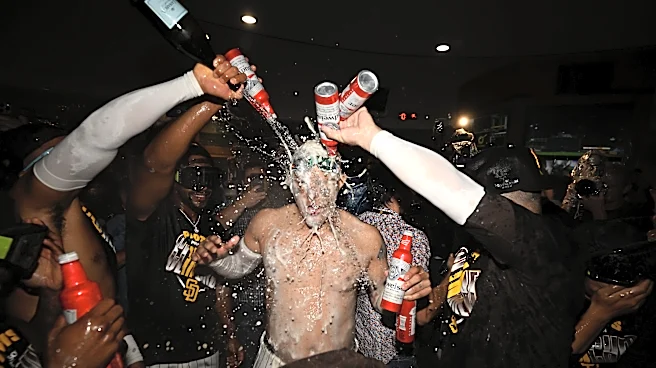
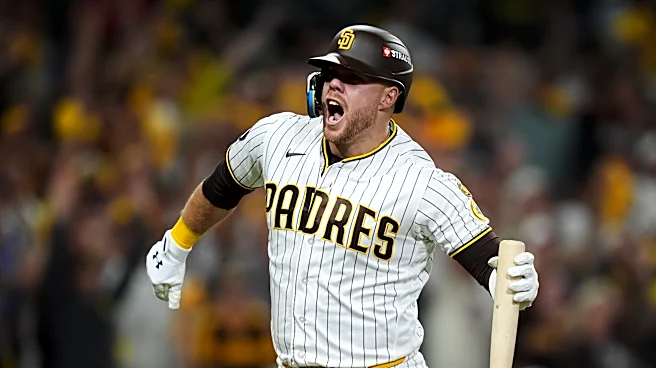
The Chicago Cubs experienced an embarrassing and swift exit from the postseason, losing their Wild Card series in two games to the San Diego Padres. Despite leading Major League Baseball in runs, walks, slugging percentage, and OPS during the regular
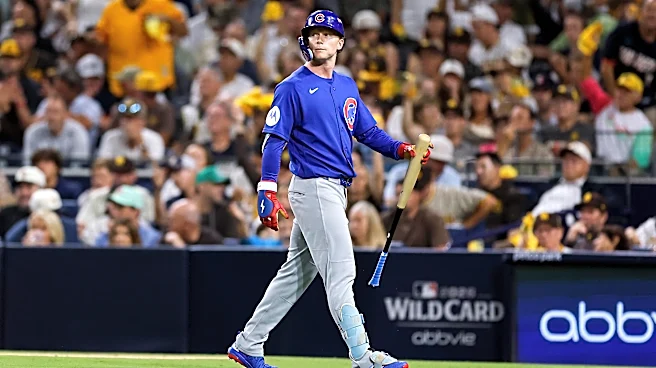
season, their offense completely collapsed in the playoffs. The team batted a dismal .129 collectively across the two games, managing only eight hits in 62 at-bats, one run, and a single extra-base hit over 18 innings. They were shut out 8-0 in Game 1 and lost Game 2 by a score of 4-1. Seven of their eight hits were singles, with Nico Hoerner's ninth-inning double in Game 2 being their only extra-base hit. Key players like Pete Crow-Armstrong and Alex Bregman combined for an 0-for-15 performance with eight strikeouts, reflecting the widespread offensive struggles.
Why It's Important?
This offensive collapse is highly significant because it starkly contrasts the Cubs' regular-season performance, where they boasted one of baseball's most potent offenses. Their inability to produce meaningful offense in the postseason, especially after leading the league in several key offensive categories, raises questions about their mental fortitude and ability to perform under pressure. The quick exit undermines a season of strong performance and leaves fans and analysts questioning the team's readiness for high-stakes playoff baseball. It highlights the unpredictable nature of short playoff series, where even dominant regular-season teams can falter. The failure of star players to deliver in critical moments further amplifies the disappointment and could lead to introspection within the organization regarding player psychology and postseason preparation.
What's Next?
The Chicago Cubs are now on vacation, with their season ending abruptly and disappointingly. The immediate aftermath will likely involve a period of reflection and analysis within the organization to understand what led to such a dramatic offensive downturn. While a .129 batting average over two games doesn't erase a strong 162-game regular season, it will undoubtedly be the lasting memory for fans and the team. The focus will shift to the offseason, where management will need to assess the roster, particularly the performance of key hitters, and consider strategies to prevent a similar collapse in future postseasons. The team will need to address how to translate regular-season success into playoff performance, potentially through adjustments in training, player acquisitions, or psychological preparation.
Beyond the Headlines
The Cubs' playoff exit underscores a recurring theme in sports: regular-season dominance does not guarantee postseason success. This phenomenon often leads to debates about the format of playoffs, the role of momentum, and the psychological pressures unique to elimination games. The team's offensive struggles, particularly the disappearance of star players, could have long-term implications for player confidence and fan perception. It also highlights the fine line between a successful season and a memorable one, with the latter often defined by postseason achievements. The brutal statistic of a .129 team batting average will serve as a stark reminder of how quickly fortunes can change in baseball, prompting deeper discussions about clutch performance and the mental game at the highest levels of competition.