







What's Happening?
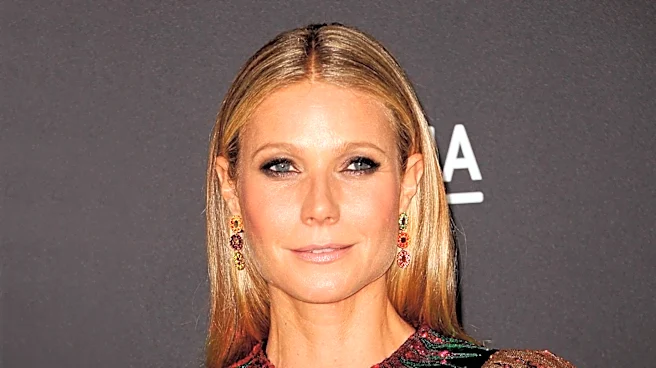
Gwyneth Paltrow recently disclosed that the term 'conscious uncoupling,' widely associated with her 2014 divorce from Chris Martin, was actually coined by their therapist. During an appearance on the 'Friends Keep Secrets' podcast, Paltrow explained that she
and Martin sought therapy to navigate their separation in a way that would minimize negative impact on their children, Apple and Moses. She consulted friends from divorced households to understand their experiences and aimed to avoid the parental friction they described. The therapist introduced the concept as a framework for them to prioritize their children's well-being and maintain a family unit, even after ending their marital relationship. Paltrow also shared that the public reaction to the term had negative consequences, including her being fired from a movie role.
Why It's Important?
Paltrow's revelation sheds light on the origins of a phrase that became a significant cultural talking point, influencing discussions around divorce and co-parenting. The concept of 'conscious uncoupling' aimed to redefine divorce as a process of respectful separation rather than adversarial conflict, emphasizing continued family cohesion. This approach challenged traditional notions of divorce and offered a model for maintaining positive relationships post-separation, particularly for the sake of children. The fact that the term originated from a therapeutic context underscores the growing recognition of mental health professionals in guiding complex family transitions. However, Paltrow's experience of being fired from a movie due to the public's perception of the term highlights the societal judgment and backlash that can accompany attempts to normalize or reframe personal life events, especially for public figures.
What's Next?
The continued discussion around 'conscious uncoupling' may further normalize the idea of amicable separations and co-parenting strategies, potentially encouraging more individuals to seek therapeutic guidance during divorce. As public figures like Paltrow share their experiences, it can reduce the stigma associated with divorce and mental health support. The term's legacy will likely continue to evolve, with ongoing conversations about its effectiveness and the challenges of implementing such a philosophy in real-world scenarios. For Paltrow, this disclosure might offer a more complete narrative about her personal journey and the intentions behind her public statements, potentially reshaping public perception of her and the term itself. The incident of losing a movie role also serves as a cautionary tale about the impact of public image on professional opportunities in the entertainment industry.
Beyond the Headlines
The 'conscious uncoupling' phenomenon reflects a broader cultural shift towards destigmatizing divorce and promoting healthier post-marital relationships, particularly when children are involved. It challenges the traditional narrative of divorce as a failure and instead frames it as a transformative process. This concept encourages individuals to prioritize emotional intelligence and long-term family dynamics over immediate emotional reactions during a separation. The public's strong reaction, both positive and negative, to the term also highlights the tension between personal autonomy in defining life events and societal expectations or judgments. It underscores how language can shape public discourse and influence perceptions of complex personal experiences, especially when introduced by celebrities, leading to both widespread adoption and intense scrutiny.